
















The Calm of Repetition: How Fibre Crafts Soothe an Overloaded Mind

There is a moment in each day that many makers know well. The house is finally quiet. The day has been loud with emails, decisions, notifications, and news. Your shoulders are tight, your thoughts are scattered, and your mind feels like a browser with far too many tabs open.
You reach for your knitting or sit down at the wheel or loom, not because you’re trying to be productive, but because something inside you knows what it needs.
One stitch. One pass of the shuttle. One treadle. Again, and again.
Slowly, almost without noticing, your breathing deepens. Your thoughts begin to untangle. The noise softens.
This is the calm of repetition, one of the quiet gifts of crafting, particularly in practices that involve bilateral movement, such as spinning, knitting, and weaving. These rhythmic, side-to-side motions don’t just make cloth or yarn; they invite the mind into a state that feels remarkably like meditation.
Why Our Minds Crave Repetition
Modern life places incessant demands on our attention. We’re expected to switch tasks quickly, absorb endless information, and remain emotionally responsive at all times. While our brains are remarkably adaptable, they were never designed for this level of cognitive overload.
Repetitive fibre crafts, particularly bilateral crafts like knitting, spinning, and weaving, offer a counterbalance.
As we weave, knit, spin, or otherwise craft, our arms and fingers, and sometimes even our feet, move in coordinated, alternating patterns that engage both hemispheres of the brain. Because the hands occupy such a large area of the brain’s sensory and motor cortex, this steady hand movement provides strong sensory input that helps our brains filter out distractions, organise information, and focus attention. This bilateral stimulation has been shown to promote a state of heightened focus and relaxation, similar to the effects of certain meditation techniques.
When we repeat a simple physical action such as forming stitches, treadling, lifting shafts, or passing a shuttle, the brain can enter a state often called relaxed focus. The continuous tactile feedback through the hands gives the mind something concrete to attend to. It is not quite meditation, but it shares many of the same benefits:
- reduced stress and anxiety
- slower heart rate and calmer breathing
- a sense of control and grounding
- improved emotional regulation
Unlike mindfulness practices that require stillness, fibre crafts give busy minds something gentle to hold onto through the movement of the hands.
The Rhythm of Knitting: Stitch by Stitch, Breath by Breath

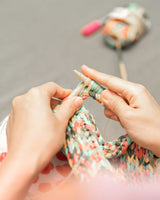
Knitting is uniquely comforting because of its portability and intimacy. The tools rest in your hands. The fabric grows beneath your fingers. A quiet conversation is happening between your hands and your nervous system. Even the most basic knit and purl stitches create a steady rhythm, one that mirrors the natural cadence of breathing.
This portability matters during periods of waiting. Knitting can accompany us in liminal spaces such as waiting rooms, long journeys, quiet evenings, or moments of uncertainty. When time feels suspended or anxious, the simple repetition of stitches gives the hands something to do and the mind somewhere gentle to settle.
Knitting as a Moving Meditation
Many knitters describe reaching a point where they no longer need to think consciously about what they’re doing. Their hands know the pattern. Their eyes soften. Their minds settle.
This is where knitting becomes deeply restorative.
Repetition supports activation of the parasympathetic nervous system, the part of the nervous system responsible for rest and recovery. Over time, regular knitting sessions can become a reliable anchor during periods of stress, grief, burnout, or simply the ongoing demands of daily life.
Mindful Tools Matter
KnitPro’s Mindful Collection is created with wellbeing at its core. From the smooth glide of the needles to the calming teal tones and engraved words of encouragement, each detail supports a slower, more intentional knitting practice.
The KnitPro Mindful Warmth Set is ideal for knitters who enjoy versatility, offering a wide range of interchangeable needle tips well-suited to comforting, long-term projects. The KnitPro Mindful Gratitude Set expands that range even further, inviting you to settle into extended knitting sessions without interruption.
Small details, such as the Mindful Chakra Stitch Markers, add subtle moments of pause and reflection within your work. For those who knit on the go or enjoy compact projects, the Mindful Explore Fixed Circular Set brings the same calm philosophy into a portable format.
These are not just tools. They are an invitation to slow down.
Weaving: Finding Stillness in Structure

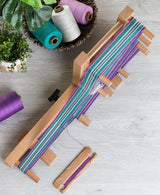
Where knitting offers a soft, flowing rhythm, weaving provides something equally soothing but subtly different: structure. The loom creates a physical framework, within which order and repetition become both grounding and reassuring.
The Comfort of Order
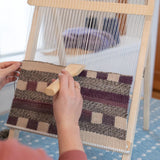
Weaving asks us to work within a system of threading, tie-ups, and sequences, and then repeat it patiently, line by line. For many weavers, this structured repetition is precisely what quiets the mind.
There is comfort in knowing what comes next.
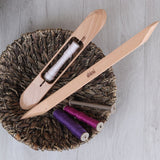
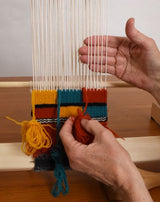
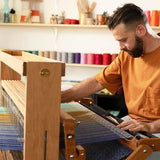
The steady beat of the beater, the familiar path of the shuttle, and the visual satisfaction of cloth emerging allow the brain to rest from constant decision-making and problem-solving.
Small Projects, Big Calm
You don’t need a large loom or a complex draft to experience the calming effects of weaving. In fact, smaller, more approachable projects often provide the greatest sense of ease.
The Maurice Brassard Crackle Weave Washcloths Pattern & Yarn Pack is a perfect example. The repeating crackle pattern offers just enough interest to keep the mind engaged without overwhelming it.
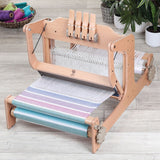
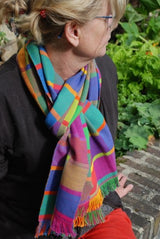
Ashford Easy Weave Kits are designed for accessibility and flow, making them ideal for beginners or anyone returning to weaving during a stressful season. The Ashford Lattice Scarf Kit combines gentle patterning with beautiful yarns, encouraging a slow, meditative pace that feels deeply satisfying.
These projects are not about rushing toward a finished piece. They are about enjoying the process, pass by pass.
Spinning: A Rhythmic Meditation

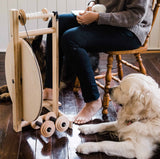
If weaving offers structure and knitting offers flow, spinning sits somewhere quietly in between. It is circular, continuous, and deeply rhythmic, inviting the body into motion while the hands focus on a single, repeating task.
The Comfort of Rhythm
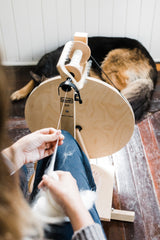
Spinning asks for attention without urgency. The fibre is drafted. The twist enters. The yarn winds on. Over and over, the same sequence unfolds, guided by touch rather than conscious thought. For many spinners, this steady rhythm becomes a form of moving meditation.
There is comfort in the predictability of the motion.
The soft whir of the wheel, the gentle pull of fibre through the fingers, and the growing bobbin of yarn create a sensory loop that allows the mind to settle. As with other repetitive fibre crafts, spinning reduces the need for decision-making, giving the brain space to rest and reset.
Tools That Support the Rhythm
The experience of calm in spinning is shaped by the tools and materials we use. Fibre that drafts smoothly and wheels that move reliably allow the spinner to relax fully into the process, rather than constantly correcting or compensating.
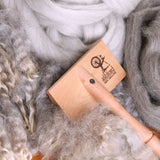
Ashford Corriedale Colour Theme Packs offer a balance of softness and resilience, making them well-suited to long, relaxed spinning sessions. Their cohesive colour palettes add visual interest without demanding constant attention. For a softer, more fluid drafting experience, 100% merino fibres such as Malabrigo Nube provide a gentle hand and consistent preparation that supports an even, uninterrupted flow.
The Ashford Kiwi 3 spinning wheel is a well-balanced choice for spinners who value consistency and ease. Its smooth treadling and steady take-up make it ideal for extended, restorative spinning. For those who spin in shared or changing spaces, the Schacht Sidekick offers the same rhythmic experience in a compact, portable form.
Some spinners prefer not to treadle at all. Electric wheels such as the Ashford e-Spinner 3 offer a different kind of calm, shifting the focus entirely to the hands and fibre and creating a quieter, more contained spinning rhythm.
Like weaving and knitting, spinning is not about speed or output. It is about the steady return to motion, the quiet satisfaction of yarn forming under the fingers, and the way repetition gently brings the mind back to itself.
Craft as Emotional Regulation
There’s a reason people often return to knitting, weaving, or spinning during periods of emotional difficulty.
Repetitive fibre crafts provide:
- Predictability, when life feels uncertain.
- Tactile comfort, through natural fibres and familiar movements.
- A sense of progress, without pressure.
- A safe space for reflection, without the need for words.
For some, crafting becomes a way to process grief. For others, it’s a tool for managing anxiety or preventing burnout. And for many, it’s simply a way to reconnect with themselves at the end of a long day.
The cloth or garment you create becomes a quiet record of the time you spend caring for your own wellbeing.
The Power of Making Slowly
In a culture that celebrates speed and productivity, knitting and weaving offer a gentle rebellion. They remind us that:
- Not everything needs to be optimised
- Repetition is not boredom; it is nourishment
- Making something slowly has value in itself
When you sit down with your needles, wheel, or loom, you are choosing presence over urgency. You are allowing your mind to settle into a rhythm that feels human again.
Creating Your Own Ritual of Calm

The most powerful part of repetitive crafts isn’t the finished object. It’s the ritual you build around them.
A familiar chair. A favourite cup of tea. Needles that feel just right in your hands. A loom waiting patiently for your return. A wheel set in motion, fibre ready to draft.
Whether you’re drawn to the mindful design of KnitPro’s needle collections, the steady structure of a weaving kit, or the quiet rhythm of a spinning wheel, these tools can help transform crafting time into a genuine act of self-care.
One stitch. One row. One length of yarn. One gentle moment of calm, repeated as often as you need.
If your mind has been feeling overloaded, perhaps it’s time to let repetition do what it does best: soothe, steady, and bring you back to yourself.
We’d love to hear about your own ritual and the tools you turn to when you need to slow down. Join us in our Facebook group.
Share this article on your favorite platform:
Table of Contents
