
























Ergonomics at the Spinning Wheel: Posture, Footwork, and Wheel Setup

The rhythm of spinning begins before the yarn does. Long before fibre is drafted or twist is added, posture, footwork, and wheel setup quietly shape the experience at the wheel.
Ergonomics at the spinning wheel is not about rigid rules or perfection, but about ease. How we sit, how our feet move, and how the wheel is positioned all influence both the rhythm of spinning and the comfort of the body. Like a dancer learning her centre, a spinner who finds alignment and support can spin longer, more joyfully, and with far less strain.
In the following section, we’ll explore posture, footwork, and wheel setup, offering practical guidance and small adjustments that help transform spinning from something that merely works into something that feels sustainable, fluid, and kind to the body.
Why Ergonomics Matters in Spinning
Imagine settling in for a quiet afternoon at your wheel. The light is soft, the merino is crimpy and inviting, and everything feels just right. Then, partway through your session, your lower back starts to tighten, your shoulders inch upward, and your feet lose their easy rhythm on the treadles. Moments like this are gentle reminders that comfort at the wheel doesn’t happen by accident.
Ergonomic awareness supports a spinning practice that feels good in the body as well as productive at the wheel. It can help to:
- Reduce fatigue and everyday discomfort
- Support longer, more relaxed spinning sessions
- Encourage steadier treadling and drafting
- Minimise the risk of long-term strain or injury
When the spinner is comfortable and supported, the yarn tends to flow effortlessly.
1. Posture: The Core of Comfortable Spinning

Your body at the wheel is more than a shape in a chair. It’s a system where bones, joints, and muscles work together. When your posture supports the natural curves of your spine and feels stable, your movements tend to be easier, your treadling more relaxed, and your fibre control steadier.
Find Your Neutral Spine
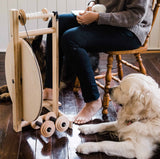
Whether you’re spinning fine lace singles or bulky roving, begin by finding a neutral spine. Sit upright but relaxed, avoiding both slouching and stiffness. Allow your pelvis to feel grounded in the chair, let your ribs rest comfortably above your hips, and imagine a gentle sense of length through the top of your head. The goal is ease, not effort.
Neutral spine is the position where the spine’s three natural curves in the neck, upper back, and lower back are maintained with minimal strain on muscles and joints. It isn’t about sitting perfectly straight, and you shouldn’t feel compressed or over-arched. Instead, you’re looking for a comfortable middle position where the lower back retains a gentle inward curve, and the head and upper back are naturally supported.
To find this position while seated:
- Sit firmly in your chair with your feet flat on the floor and your knees at about a right angle.
- Slowly rock your pelvis forward and backward to feel the difference between a rounded lower back and an exaggerated arch.
- Gradually narrow that movement until you settle into a neutral zone where your sit bones support you evenly and your spine feels balanced rather than held. Your ears should align roughly over your shoulders and hips.
This balanced alignment reduces unnecessary stress on the muscles and discs of the spine and makes it easier to spin comfortably for longer periods without fatigue or discomfort.
Tip: Adding a small cushion or lumbar pad at the curve of your lower back can make neutral posture easier to maintain, particularly during longer spinning sessions.
Seat Height and Support
Your feet should reach the treadles easily, with your knees level with or slightly below your hips. When a seat is too high or too low, the body often compensates through the lower back, hips, or legs, which can lead to discomfort over time. A spinning-specific chair, such as the Ashford Spinning Chair, can offer helpful adjustability and support, but it isn’t essential. Any sturdy chair, including a dining or office chair, can work well as long as it allows your feet to rest comfortably and your spine to remain in a neutral position.
Shoulders Down, Elbows Close
Keep your shoulders relaxed and resting comfortably rather than lifted or tense. Tightness here is often an early sign that something in your setup or posture needs adjusting. A gentle shoulder roll forward, up, and back can help reset this area, allowing the arms to release naturally downward. Let your elbows rest close to your sides instead of flaring outward, so your forearms and hands can move freely. This position supports smoother fibre control and reduces unnecessary strain through the shoulders and arms.
Tip: If your arms begin to tire, try placing a small cushion or pillow in your lap to support your forearms. This can reduce shoulder strain and help your hands move more comfortably while drafting.
2. Footwork: Dance with Your Treadles

Your feet provide the rhythm that keeps the wheel moving. Whether you’re using a single treadle or a double treadle setup, footwork plays an important role in wheel speed, momentum, and overall consistency. When your feet move comfortably and evenly, the rest of your spinning often feels easier too.
Single vs Double Treadling
Many spinners begin with single treadling because it feels straightforward and easier to coordinate while learning to draft. It offers simplicity and focus, especially at slower speeds. As confidence grows, some spinners choose to convert a single-treadle wheel, such as the Ashford Traditional, to double treadling using an add-on kit, such as the Ashford Traditional Double Treadle Kit, to explore a smoother, more balanced rhythm.
- Single treadle: Simple and approachable, well suited for learning and for deliberate, slower spinning
- Double treadle: Encourages smoother momentum and more even balance once both feet are working comfortably together
Neither approach is better than the other. The best choice is the one that feels natural in your body and supports the way you like to spin.
Foot Placement & Flexibility
Rest your feet on the treadles with the ball of the foot centred and the heel relaxed. Avoid locking your ankles or pushing with a stiff leg. Instead, allow a gentle flex through the foot and ankle so the motion stays fluid and rhythmic.
Aim for a smooth, even treadling tempo rather than speed. An uneven rhythm can contribute to an inconsistent twist in the yarn and, over time, unnecessary strain through the knees, hips, or ankles.
Reset cue: If your feet start to feel tense or uneven, pause briefly. Let your feet come off the treadles, roll your ankles gently, and place them back down with a softer touch. Small resets like this can make a big difference over longer sessions.
3. Wheel Setup: Crafting Your Spinning Environment

Every wheel has its own unique personality, and part of ergonomic spinning is tuning that personality to your body and style.
Adjusting Wheel Height & Distance
Your wheel should be positioned close enough that your arms can float forward in a relaxed arc. If you notice yourself reaching, leaning, or hunching toward the orifice, it’s a sign the wheel needs to be repositioned. Your legs should bend comfortably at the knees, with your feet resting naturally on the treadles.
If you prefer to spin long draw, you may find that a slightly angled position in relation to the wheel feels more comfortable. Sitting at an angle can reduce twisting through the spine and allow the arms and shoulders to move more freely. As always, comfort varies from body to body, and what works well for one spinner may not suit another. Small adjustments are often more effective than dramatic changes.
A variety of well-designed wheels can support different ergonomic needs:
- Ashford spinning wheels are widely known for their smooth craftsmanship and beginner-friendly designs.
- Schacht spinning wheels offer both traditional and modern options with thoughtful engineering.
- Louet spinning wheels are valued for their balance, versatility, and efficient treadling.
- Electric spinning wheels provide sit-anywhere convenience, adjustable speed control, and foot-free spinning, which can be especially helpful for those managing lower-limb fatigue or injury.
Tension and Brake Setup
Your wheel’s tension should be adjusted so the leader feeds smoothly into the orifice with minimal effort, without being pulled in too aggressively when twist builds. If the tension is too tight, treadling often feels heavier and more tiring. If it’s too loose, drafting can become uneven or unpredictable. The ideal setting will vary depending on the style and thickness of yarn you’re spinning.
Make adjustments gradually and give your body time to notice the difference. When the wheel’s resistance works with your natural movement rather than against it, spinning tends to feel lighter, steadier, and more comfortable.
Practical Checklists for Your Next Spinning Session
Pre-Spin Posture Check
- Feet resting comfortably on the treadles, knees relaxed
- Chair height supporting a neutral spine
- Shoulders soft and relaxed
- Elbows are close to the body and can move freely
Footwork Check
- Smooth, even treadling rhythm
- Equal engagement of both feet when using a double treadle. Consider alternating feet occasionally on a single treadle wheel to reduce fatigue.
- Ankles aremoving naturally without locking.
Wheel Setup Check
- Wheel positioned within a comfortable, easy reach
- Tension adjusted for smooth, controlled draw-in
- Tools and fibre placed within relaxed arm’s reach
Comfortable Body, Joyful Yarn

Great spinning happens when your body and wheel are in harmony. Posture, footwork, and wheel setup aren’t just checklist items. They’re the quiet foundations that weave comfort into every yard of yarn you create. From relaxed shoulders to steady, rhythmic treadling, an intentional ergonomic approach supports longer sessions, greater ease, and less strain.
Once your body is comfortably aligned, it’s worth giving the same attention to the wheel itself. A well-maintained wheel moves more smoothly, responds more predictably, and works with your body rather than against it. If you’d like to go deeper, we have a dedicated guide to wheel care and maintenance.
Whether you’re exploring the warm tones of merino or chasing the sheen of silk, your ergonomic foundation is the quiet partner in every project. Tune both your body and your wheel, and you’ll find that the rhythm of spinning feels as beautiful as the yarn it creates.
Share this article on your favorite platform:
Table of Contents

2 comments
Great article, thank you. I have been spinning for a while and now know my favourite setup and wheels, but it’s always good to be reminded. I feel relaxed and meditative while I am spinning, apart from one problem – I develop very sore seat bones after an hour or so. I’ve tried a cushion on my spinning chair, but it feels insecure and too high. Does anyone have any suggestions?
I enjoyed artical just to read the various observations and hints for session spinning. Experience is not me thing but best practice suggestion very helpful I think. Thankyou I enjoyed the artical I saw another a little while ago of significant interest. Cheers.