















Top 20 Crochet Terms Every Beginner Must Know
If you’ve ever opened a crochet pattern, seen the abbreviations, and wondered if you were trying to decode ancient runes, you’re not alone.
Every crocheter starts here.
Crochet has its own language, and at first it can feel overwhelming. But the good news is that most patterns rely on the same small group of terms, used again and again. Once you understand these basics, everything else gets easier. Your hands relax, your confidence grows, and suddenly that “impossible” pattern feels doable.
This guide breaks down 20 essential crochet terms every beginner should become familiar with, explaining what they mean and how they’re usedso that you can read patterns with clarity, confidence, and far less frustration.
Why Crochet Terms Feel Confusing at First (and Why That’s Normal)
Crochet patterns use shorthand to save space and stay consistent. Once you know the language, this feels practical and efficient, but at the beginning, it can be surprisingly intimidating.
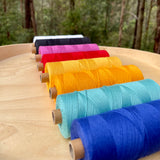
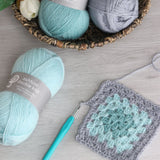
One small choice that can make learning easier is the yarn you use. Smooth, well-spun yarns offer clear stitch definition, helping you see what your hands are doing as you learn. This is why many crocheters begin with yarns like those in the Scheepjes range, which are valued for their consistency and clarity.
Now, let’s move through the basics, one stitch at a time.
UK vs US Crochet Terminology
Before we dive in, let's talk about the differences in regional terminologies. One thing that catches almost every crocheter at least once is that UK and US crochet terms can be quite different, even though many of the abbreviations look the same. This means the same abbreviation can describe a completely different stitch depending on which terminology the pattern uses.
Below are some of the most common differences you’ll encounter.
| UK Crochet Terms | US Crochet Terms |
|---|---|
| treble (tr) | double crochet (dc) |
| triple treble (trtr) | double treble (dtr) |
| half treble (htr) | half double crochet (hdc) |
| tension | gauge |
| double crochet (dc) | single crochet (sc) |
| slip stitch (ss) | slip stitch (sl st) |
| double treble (dtr) | treble (tr) |
| yarn over hook (yoh) | yarn over (yo) |
Most patterns clearly state whether they use UK or US terms. If they don’t, checking the designer’s location or the pattern’s origin usually helps. The stitch names themselves will also often give it away.
The Top 20 Crochet Terms Explained
1. Chain (ch)
The chain stitch is the most basic crochet stitch. It is made by yarning over and pulling the yarn through the loop on the hook, creating a linked V-shaped foundation often used to begin rows and rounds.
Beginners often find chains easier to see and count when using smooth yarns like Scheepjes Cotton Whirlette, which doesn’t split easily.
2. Slip Knot
A slip knot creates the adjustable loop that goes on your hook before you begin crocheting. It tightens neatly around the hook, providing a secure starting point.
3. Yarn Over (yo)
Yarn over is the action of bringing the yarn over the hook by placing the hook under the yarn strand and catching it from below to form a new loop.
4. Slip Stitch (sl st)
A slip stitch joins rounds, moves your yarn across your work, or finishes an edge neatly. It doesn’t add height, which makes it perfect for tidy transitions.
5. Single Crochet (sc)
Single crochet is a short, sturdy stitch that forms a dense fabric and is commonly used for dishcloths, toys, and baskets. Smooth yarns such as Scheepjes Catona make stitch definition clear and easy to follow.
6. Half Double Crochet (hdc)
The half double crochet sits between single and double crochet in height. It adds a little lift without feeling too loose, making it a popular choice for scarves and garments.
7. Double Crochet (dc)
One of the most commonly used stitches, double crochet, works up quickly and creates a more open, drapey fabric. It’s perfect for blankets and shawls, especially when paired with soft, flowing yarns like Scheepjes Woolly Whirlette for cosy projects.
8. Treble Crochet (tr)
Treble crochet is taller than double crochet, creating a light, airy fabric. It’s often used in lace patterns and decorative designs where openness and drape matter.
9. Stitch (st)
Crochet stitches have two main parts: the top of the stitch, which forms a small V shape, and the post, which is the longer body of the stitch below. When working into a stitch, you insert your hook under both loops that form the V at the top. When working around a stitch, you insert your hook around the post instead.
A stitch is each unit of crochet fabric. Patterns often tell you how many stitches you should have, and counting them as you work helps prevent frustration later.
10. Space (sp)
A space is the gap between stitches, most often created by working one or more chain stitches to form an empty area in the fabric. Many patterns instruct you to work into the space rather than into the stitch itself, creating intentional openings in the crochet fabric.
11. Turning Chain (tch)
A turning chain is one or more chain stitches made at the end of a row to raise the yarn to the height needed for the next row. After making the turning chain, you turn your work and continue crocheting in the opposite direction. The number of chains depends on the height of the stitch being used, and whether the turning chain counts as a stitch is determined by the pattern.
12. Fasten Off (FO)
To fasten off in crochet, complete your final stitch, then cut the yarn, leaving a short tail. Pull the tail fully through the loop on your hook to secure the work, tightening gently to avoid distorting the fabric. The remaining yarn is woven into the piece with a yarn needle to hide and secure the end.
13. Weave In Ends
Weaving in ends is the process of securing and hiding the loose yarn tails left after fastening off so that your crochet project stays neat and doesn’t unravel. It’s typically done with a yarn (or tapestry) needle by threading the yarn tail through stitches on the wrong side of the fabric for a few inches, often changing direction as you go to lock the tail in place. This buries the loose end within the work to securely hide it.
14. Gauge
Gauge refers to how many stitches and rows fit within a specific measurement, usually 4 inches (10 cm). It is especially important for garments, where fit matters more than speed. Patterns define gauge as a ratio, such as 12 stitches and 10 rows in single crochet equal 4 inches. To check gauge, you should work a swatch of fabric—typically about 4 × 4 inches—using the same stitch pattern and yarn as the project.
15. Round (rnd)
Working in the round means a project is crocheted continuously in a spiral, moving outward rather than turning at the end of each row. This method is commonly used for hats, coasters, and amigurumi, and is also seen in many granny square designs.
16. Row
In crochet, a row refers to one complete pass of stitches worked across the piece from one side to the other. When working flat, you reach the end of the row, turn your work, and begin the next row, often working on the opposite side of the fabric.
17. Increase (inc)
An increase in crochet means working two or more stitches into the same stitch or space from the previous row or round. This adds stitches to the fabric, increasing its width, diameter, or circumference, and is commonly used for shaping, such as forming flat circles in amigurumi or widening garments.
18. Decrease (dec)
A decrease reduces the number of stitches by combining two or more stitches into one. This narrows the fabric and is used for shaping, such as tapering sleeves, forming necklines, or shaping crochet toys.
19. Pattern Repeat
A pattern repeat is a specific sequence of stitches or rows that is worked multiple times across a row, round, or throughout a project to create a consistent design. It is usually indicated by asterisks (*), brackets, or parentheses, and once you learn to spot it, crochet patterns become much easier to follow.
20. Magic Ring (Magic Loop)
A magic ring, also called a magic circle, is an adjustable starting loop used to begin crochet projects worked in the round, such as amigurumi. Stitches are worked directly into the loop, which is then tightened to close the centre, eliminating the hole often left by traditional chain-based starts.
A Final Word of Encouragement
You don’t need to memorise everything at once. Most crocheters keep a glossary close at hand for a long time, and some keep one forever. That’s completely normal.
With the right tools, a beginner-friendly yarn, and a little patience, crochet becomes less about remembering terminology and more about enjoying the steady rhythm of your hands at work.
If this feels confusing at first, you’re not doing anything wrong. It’s simply part of learning the language of crochet. Download our FREE Printable Crochet Glossary here and keep it handy as you learn crochet.
When you’re ready to put these terms into practice, explore our curated collections of crochet patterns, crochet kits, and crochet hooks. You’ll find everything you need to take your next confident step.
You’re not behind. You’re exactly where every crocheter starts.
Share this article on your favorite platform:
Table of Contents
- Why Crochet Terms Feel Confusing at First (and Why That’s Normal)
- The Top 20 Crochet Terms Explained
- 1. Chain (ch)
- 2. Slip Knot
- 3. Yarn Over (yo)
- 4. Slip Stitch (sl st)
- 5. Single Crochet (sc)
- 6. Half Double Crochet (hdc)
- 7. Double Crochet (dc)
- 8. Treble Crochet (tr)
- 9. Stitch (st)
- 10. Space (sp)
- 11. Turning Chain (tch)
- 12. Fasten Off (FO)
- 13. Weave In Ends
- 14. Gauge
- 15. Round (rnd)
- 16. Row
- 17. Increase (inc)
- 18. Decrease (dec)
- 19. Pattern Repeat
- 20. Magic Ring (Magic Loop)

1 comment
Thank you unbelievably helpful