













30 Essential Felting Terms Every Beginner Should Know
Starting your felting journey is a little like opening a door to a soft, woolly world of colour and texture. Pick up a bag of roving to make a hat, grab a felting needle to sculpt a tiny animal, or lay out layers of wool for a shawl, and suddenly people are talking about barbs, fulling, and migration as if it were perfectly normal. If you are new to felting, all of that can feel a little overwhelming.
This guide walks you through 30 essential felting terms that every beginner should know, explaining what they mean and how they apply to real felting projects.
Core Felting Terms and Processes
These terms explain what felting is and how it physically happens.
Felting
Felting is the process of interlocking animal fibres, most commonly wool, into a dense fabric or solid form. This happens because wool fibres have microscopic scales that open when exposed to heat, moisture, and friction. As the fibres move against each other, the scales catch and tangle, forming a stable fabric.
Example: When loose wool is laid out flat and rubbed with warm, soapy water, it gradually transforms into a strong piece of felt fabric.
Wet Felting
Wet felting uses warm water, soap, and movement to bond fibres. The soap reduces the surface tension of water, allowing it to penetrate the wool more easily, while rubbing and pressing cause the fibres to mesh into one cohesive piece. Scarves, bags, and flat panels are all popular wet-felted projects.
Example: When creating a felted scarf, you carefully layer wool fibres, add warm soapy water, and gently rub until the fibres begin to mesh into one cohesive fabric.
Needle Felting
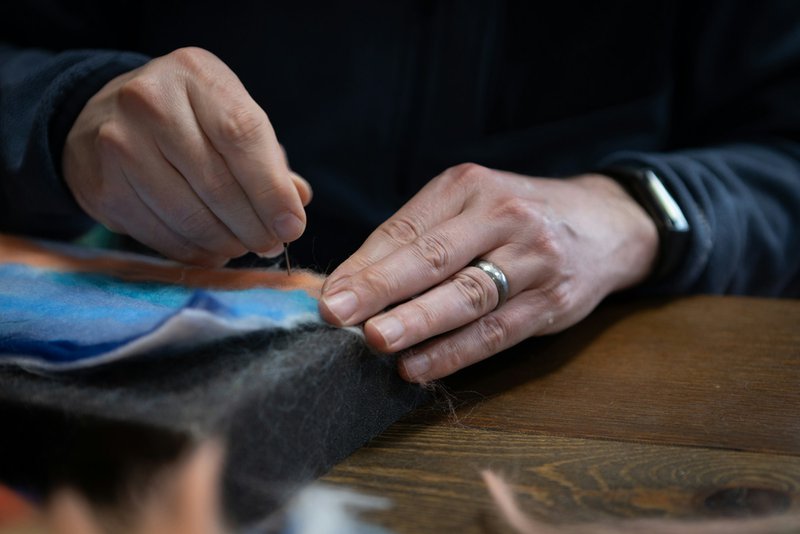
Needle felting is a dry technique that uses a special barbed needle to tangle fibres together. Instead of using water and soap, repeated poking physically pushes fibres together, tightening and shaping them. This method is especially popular for sculptural and decorative pieces. You can start with something as simple as an Ashford Needle Felting Starter Kit, which includes needles, fibre, and Barbara Allen's guide to get you going.
Example: A small felted animal is built by repeatedly inserting a barbed needle into wool until it becomes firm and holds its shape.
Agitation
Agitation is the rubbing, rolling, pressing, or throwing motions used during wet felting. Movement is essential because it encourages fibres to shift and lock together. In needle felting, the repeated poking of the needle achieves a similar result, using friction and pressure to tangle fibres rather than water and movement. Without enough agitation, the wool remains loose and fragile.
Example: After laying out your wool and adding soapy water, gently agitating the surface helps the fibres begin bonding. In needle felting, repeatedly poking a clump of roving into a firm ball achieves the same result through mechanical agitation rather than water and soap.
Fulling
Fulling is the strengthening stage that follows initial felting. Once the fibres are lightly bonded, more pressure and movement are applied to shrink and harden the fabric. Fulling determines the final density and durability of your piece. In modern felting communities, felting and fulling are sometimes used interchangeably, but it is worth knowing the difference.
Example: Rolling a felted bag tightly in a towel and applying firm pressure makes it denser and more structured.
Shrinkage
Shrinkage is the natural reduction in size as fibres compress and tighten. Depending on your wool and technique, you can expect 20% to 40% shrinkage. It is important to sample before starting a project. Try felting a 10cm square using your intended method, then measure how much it has shrunk, so you know what to expect from your chosen fibre and technique.
Example: If you want a finished felt square measuring 20 centimetres, you might begin with a 28-centimetre layout to account for shrinkage.
Fibre Types and Preparation
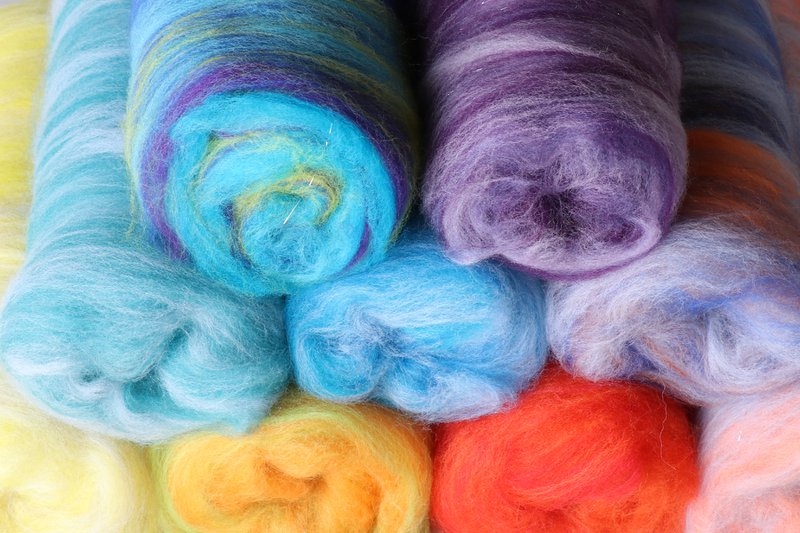
These felting terms describe the materials you work with and how they are prepared.
Wool
Wool is the most widely used fibre in felting because of its scale structure. The tiny scales along each strand allow fibres to grip and lock together under the right conditions. Different breeds of sheep produce wool with different levels of softness, coarseness, and felting speed.
Example: Fine merino wool produces smooth felt, while a coarser breed creates a more textured, rustic finish.
Fibre Content
Fibre content refers to the specific materials in your blend, such as merino, Corriedale, alpaca, or silk. Each fibre behaves differently during felting, affecting shrinkage, texture, and strength. Understanding fibre content helps you choose the right material for your project.
Example: A blend containing silk may produce a lighter, shinier finish than pure wool.
Crimp
Crimp is the natural waviness found in wool fibres. Fibres with more crimp tend to felt more quickly because they have more points of contact for interlocking. Crimp also adds elasticity and bounce to the finished felt.
Example: Wool with strong crimp bonds faster during wet felting than very straight fibres.
Roving
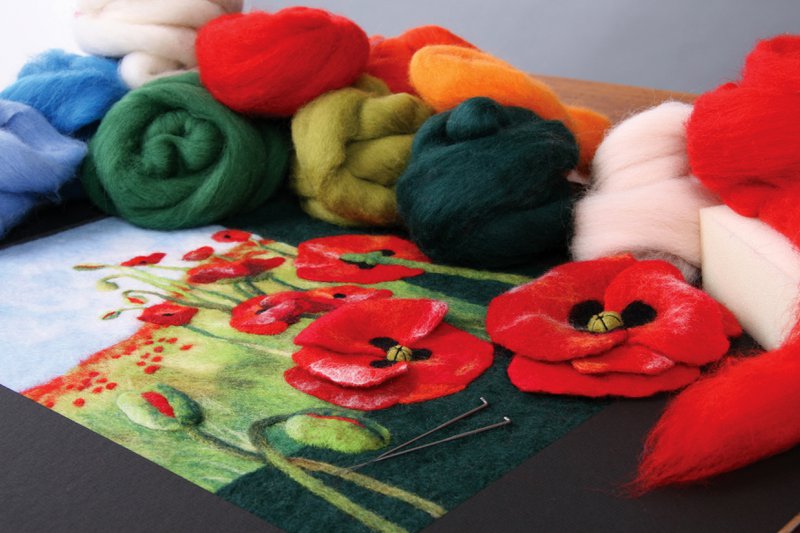
Roving is carded wool formed into soft, rope-like strands. The fibres are loosely aligned, making it easy to pull apart and shape. Roving is extremely versatile and commonly used in both wet and needle felting.
Example: When building the body of a needle-felted animal, you pull off small amounts of roving and compress them gradually into shape.
Top
Top is combed wool with fibres aligned neatly in the same direction. This alignment creates a smoother and more consistent finish. It is often preferred for fine surface work or projects requiring clean lines.
Example: Using wool top in nuno felting can create elegant, flowing textures.
Batting
Batting is wool carded into flat sheets with fibres arranged more randomly. It layers easily and is especially useful for wet-felting flat projects. Batting tends to produce a softer, slightly textured surface. You can create your own batts by using a drum carder.
Example: To create a felted mat, you may layer batting in alternating directions for strength.
Core Wool
Core wool is typically a less expensive wool used to form the internal structure of needle-felted pieces. It provides bulk and stability before decorative layers are added. This makes projects more cost-effective.
Example: A felted bear’s body may be built with core wool and covered with coloured merino for the outer layer.
Carding
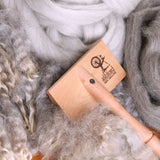
Carding is the process of brushing fibres to separate, align, or mix them. It can be done with hand carders or a drum carder. Carding improves fibre consistency and allows custom colour blends.
Example: Carding white and red fibres together creates a soft pink shade.
Blending
Blending is the creative mixing of fibres or colours to achieve custom effects. This can be done during carding or by gently pulling fibres together by hand. Blending adds depth and variation to felted work.
Example: Blending shades of blue and green produces a natural ocean-inspired tone.
Silk Hankies
Silk hankies are stretched silk cocoons that add sheen and texture to felt. They are often layered with wool to create contrast. Silk does not felt on its own but bonds beautifully with wool during wet felting.
Example: Adding silk hankies to a scarf creates subtle highlights that shimmer in the light.
Felting Tools and Equipment

These are the essential tools that support your felting practice.
Felting Needle
A felting needle is a specialised tool with tiny barbs along its shaft. These barbs catch and push fibres deeper into the wool mass, causing them to tangle. Needles come in various sizes for shaping or detailing.
Example: A coarse needle shapes the base, while a fine needle refines small facial features.
Barbs
Barbs are the small notches on the felting needle. They are responsible for grabbing fibres and moving them through the wool. The size and placement of barbs affect how aggressively the needle felts.
Example: Larger barbs felt quickly but may leave visible marks on delicate surfaces.
Felting Foam
Felting foam is a thick, dense pad used as your work surface for needle felting. It allows the needle to pass safely through the wool without hitting something hard underneath. It is lightweight, portable, and a good option for beginners. The surface does compress over time with regular use.
Example: When shaping a small felted heart, you place it on a felting foam pad and poke straight down into the wool. The needle passes into the foam beneath, preventing breakage and keeping your work surface safe.
Wool Mat
A wool mat is a thick pad made from densely pressed wool. It is more durable than foam and gives consistent resistance for longer projects. It is a good option if you needle felt regularly and want a longer-lasting surface.
Example: When sculpting a medium-sized animal, a wool mat allows the needle to pass smoothly while keeping the project stable and firm.
Brush Mat
Brush mats are made from flat-backed brushes with bristles that provide a springy, firm surface for felting. Many felters place a thin piece of felt over the bristles to protect the needle and create a slightly softer working surface. A key advantage is that wool is less prone to sticking to a brush mat than to foam, which makes it easier to lift and reposition your work. Brush mats are long-lasting and good for flat or surface felting work. On the downside, the bristles can shift as you work, the hard base can bend or break needles if your angle is off, and they offer a smaller working area than foam or wool mats. They can also be harder to clean and tend to be more expensive. They remain popular for fine, detailed needle felting
Example: For small details like the ears or nose of a felted animal, a brush mat gives a firm surface for careful shaping, though you must take care with your needle to avoid bending it.
Armature
An armature is a wire framework placed inside needle-felted sculptures to provide structure. It allows limbs to hold a pose or bend into position. Very useful for larger figures, animals, and poseable dolls.
Example: A felted doll may contain a wire armature to allow it to stand upright.
Resist
A resist is a barrier, usually made from plastic sheeting or foam, placed between layers of wool during wet felting. It stops the wool bonding in certain areas, allowing you to create hollow or shaped forms.
Example: A resist placed within layers of wool allows you to create a seamless felted handbag.
Techniques and Methods

These terms describe specific ways of working with fibre.
Layout
Layout refers to how you arrange your fibres before wet felting begins. Fibre direction affects how evenly your piece shrinks. Alternating layers horizontally and vertically creates a more balanced and durable finished fabric.
Example: Laying one layer horizontally and the next vertically strengthens the finished fabric.
Pre-Felt
Pre-felt is wool that has been partially felted but not fully hardened. It is stable enough to cut into shapes but still flexible enough to bond further during fulling. It is ideal for adding decorative elements.
Example: Cutting leaf shapes from pre-felt and bonding them onto a background during further felting.
Nuno Felting
Nuno felting bonds wool onto a lightweight base fabric like silk or cotton. The wool migrates through the weave and locks in place during wet felting. The result is a beautifully textured, lightweight textile.
Example: A Nuno felted scarf combines silk chiffon and fine wool for a delicate finish.
Migration
Migration describes how wool fibres move through fabric during nuno felting. A successful migration ensures a strong bond between the materials. It is visible when fibres appear on the reverse side of the fabric.
Example: Seeing tiny wool fibres emerge through silk indicates proper bonding.
Sculpting
Sculpting is the shaping of wool into three-dimensional forms during needle felting. It requires patience and gradual compression. Careful layering produces smooth contours.
Example: Forming a mushroom cap by gradually compressing wool into a rounded shape.
Surface Design
Surface design involves adding decorative fibre elements before or during felting. It allows patterns and textures to become permanently embedded. Planning placement is important.
Example: Adding contrasting fibre swirls on top of a base layer before wet felting.
Embellishment
Embellishment refers to decorative additions made after the main felting is done. Embroidery stitches, beads, or extra fibre details all count.
Example: Stitching embroidery onto a finished felted brooch.
Felting Finishing and Shaping Techniques

These terms relate to completing and refining your project.
Blocking
Blocking is shaping felt while it dries to maintain its intended form. It helps create clean lines and smooth curves. Proper blocking improves the final presentation.
Example: Placing a felted hat over a bowl while drying to hold its rounded shape.
Gauge
In needle felting, gauge refers to the thickness of the needle or the density of the finished piece. Thicker needles work faster, while finer needles refine detail. Understanding gauge improves control and finish quality.
Example: Switching to a fine gauge needle to smooth the surface of a sculpture before completion.
Bringing It All Together
Felting is both simple and magical. At its heart, it is about fibre, friction, and patience. As you can see, there is a rich vocabulary of felting terms that supports your learning and helps you understand what is happening beneath your hands.
As you begin experimenting with roving, needles, soap, and resist shapes, do not worry about memorising every term straight away. The language of felting becomes natural as you practise. When you lay out your fibres carefully, feel the change during fulling, or sculpt a tiny nose with a fine needle, these terms will start to make sense in a tactile and intuitive way.
The most important thing to remember is that felting rewards curiosity. Try wet felting a simple flat square. Try needle felting a small heart. Notice the shrinkage. Experiment with blending colours. Feel how core wool firms up as you work.
Each project will teach you something new, and each term in this guide will become part of your creative vocabulary. When you are ready to get started, Thread Collective stocks everything you need, from Ashford felting needles and fibre for felting, felting foam, and kits. Browse the full range at threadcollective.com.au and find the right supplies for your first project, and download your FREE Printable Felting Glossary here.
Welcome to the world of felting. It is soft, colourful, and full of possibilities!
Share this article on your favorite platform:
