






























Weaving Guide: Can You Use Tencel Yarn for Warp?

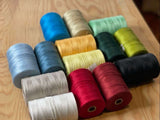
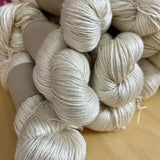
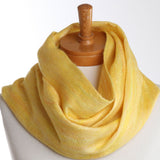
Tencel has become a favourite among handweavers for its silky drape, rich sheen, and gorgeous saturated colourways. Maurice Brassard's 8/2 Tencel, in particular, is known for weaving beautifully into scarves, shawls, and elegant fabrics. But when it comes to using Tencel as warp, weavers often have questions—and lately, some challenges.
If you're considering Tencel warp for your next project, this guide will walk you through what works, what to avoid, and how to achieve the best results on your loom.
Is Tencel Suitable for Warp?
The short answer: Yes—but with very careful tension management.
Tencel is strong when pulled steadily, but it performs poorly under strong tension, continuous abrasion, and uneven pulling. This is not a flaw unique to the fibre; it's simply part of its structure as a regenerated cellulose filament yarn.
The Leclerc weaving guide notes that while Tencel thread "is difficult to break, it is not resistant to strong tension and continuous friction". This means that over-tensioning your loom—or weaving too close to the reed—can lead to snapped warp ends, especially near the selvedges. Using the diagonal weft technique is important.

Maurice Brassard Tencel may be used for warp on most looms (except inkle looms). However, strong or uneven tensions may cause breakage, and certain dye batches may be more fragile. Please weave with care.
Why Tencel Should Not Be Used for Inkle Loom Warps
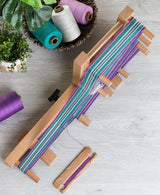
Inkle looms apply high, consistent tension and create repeated friction at the heddles—conditions Tencel does not tolerate well. Breakage is extremely likely, so we don't recommend Tencel for inkle warp under any circumstances. Cotton, cottolin, linen, and polyester are much more suitable.
Can I Use Tencel Warp on Rigid Heddle Looms?
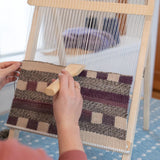
Rigid heddle looms create a very different tension profile compared to multi-shaft looms, and that matters when working with a sensitive fibre like Tencel. In the heddle-up position, the threads running through the holes are lifted higher and stretched more tightly than they would be on a multi-shaft loom. If the warp tension is even slightly too firm, or if certain threads take more strain than others, breakage becomes more likely.
In contrast, the heddle-down position is generally gentler on the warp, with less strain placed on individual threads.
Rigid heddle weavers can use Tencel as warp, but it requires extra care:
- Use softer overall warp tension, just as you would on a multi-shaft loom weaving with Tencel.
- Pay close attention to the heddle-up shed, where Tencel threads are most vulnerable.
- Keep your weaving width close to the full width in the heddle to avoid side stress.
- Maintain a good diagonal with your weft to minimise draw-in and reduce edge abrasion.
Tencel can produce beautiful results on a rigid heddle loom—but the heddle-up shed makes careful tension management essential if you want to minimise snapped ends and keep the weaving experience smooth.
How to Successfully Use Tencel as Warp
Despite its sensitivity, Tencel can make gorgeous warp-faced and balanced fabrics. The key is learning how to work with it—not against it.
Below are essential tips drawn from both weaving experience and the Leclerc Tencel-weaving instructions.
1. Weave with Low Tension
The most important rule: use as little tension as possible.
Leclerc emphasises this repeatedly: on both 4-shaft and 8-shaft looms, "it is important to weave with as little tension as possible on the warp threads.”
How to check your tension:
- Release your warp tension.
- Press a treadle and check the shed height.
- Add tension only until the shed is acceptable—no more.

This may feel strange if you're used to cotton, linen, or orlec warps, which like firm tension, but Tencel thrives under softness.
2. Keep the Fabric Width Close to the Reed Width
Narrowing your weaving too far leads to:
- excessive draw-in
- side friction
- selvedge breakage
Leclerc warns that to avoid snapped threads "near the selvedges, you must weave in such a way as to keep the width of the fabric as close as possible to the reed width and not to weave too close to the reed.”
3. Beat Twice Before Throwing the Shuttle
This technique helps seat the bottom threads securely and reduces friction in the open shed.
The instructions recommend:
"Before throwing the shuttle, beat again to ensure that the bottom threads are firmly seated on the shuttle race.”
This small change can significantly reduce abrasion, especially on multi-shaft looms.
4. Use the Diagonal Weft Technique
To avoid tension spikes at the selvedges:
- throw your weft on a diagonal
- bubble the weft slightly
- beat gently
This technique helps maintain the full fabric width and decreases stress on edge warp threads.
5. Consider Your Reed Choice
Fine dents cause more abrasion, especially when weaving with a sticky or finer-than-average Tencel. A slightly wider reed may help:
- reduce friction
- improve shed clarity
- minimise snapped selvedge threads
6. Watch for Problem Colourways
Since the dyeing issue can affect specific colours, keep notes about which colourways break more often. If you encounter a particularly fragile cone, we'd love to hear from you so we can pass that feedback along.
Loom-Specific Notes

On Counterbalanced 4-Shaft Looms
Leclerc notes that you must "weave with much less tension compared to a cotton, polyester or orlec warp.” If you're accustomed to firm tension on these looms, Tencel will require an adjustment in your weaving style.
On 8-Shaft Looms
You must use especially low tension because these looms often have more friction points. Leclerc demonstrates on the images above how shed height improves through careful tension adjustment.
What You Can Expect from Tencel Warp When Managed Well
With proper handling, Tencel warp will reward you with:
- luxurious drape
- beautiful colour depth
- crisp, elegant cloth
- smooth finishes perfect for scarves, tops, and accessories.
Many weavers love Tencel for its silk-like hand at a fraction of the price—and when woven with care, the results are stunning.
When Tencel Warp May Not Be Ideal
You may prefer not to use Tencel as warp if:
- you require high warp tension
- you're weaving on an inkle loom
- your design heavily abrades the warp
- you're using a colourway prone to breakage
- you are new to managing low-tension warps
- you are still learning to achieve good, even tension across your warp
In these cases, cotton, cottolin, or bamboo may be better options.
Final Thoughts
Tencel warp can be a joy to weave—smooth, glossy, and beautifully drapey—if you respect its sensitivity to tension and friction. With low tension, gentle beating, and attention to edge abrasion, you can achieve elegant results on multi-shaft looms.
And while some colour batches of Maurice Brassard Tencel have recently shown fragility due to a dyeing issue, we're committed to supporting you with accurate information so you can decide when and how to use Tencel successfully in your weaving practice.
Ready to Try Tencel in Your Next Project?

Explore our full range of Maurice Brassard Tencel yarns and find the colours that inspire your next weave. Whether you're experimenting with Tencel as warp or saving it for a drapey weft, we're here to help you choose the right materials for beautiful results.
Share this article on your favorite platform:
Table of Contents
