




















A Weaver's Guide to Colour Theory

Colour is one of the most powerful tools in a weaver's creative toolkit. It can set the tone of your project, evoke emotion, and transform a simple pattern into something extraordinary. However, with countless hues, tints, and tones to choose from, knowing how to combine them effectively can be a challenge. That's where colour theory comes in.
In this guide, we’re excited to dive into the essentials of colour theory and its application in your weaving projects! By grasping the colour wheel and the principles of contrast and harmony, you'll be well-equipped to tackle your next warp with both confidence and creativity.
What Is Colour Theory?
Colour theory is the study of how colours interact with each other. It's a framework that helps artists and designers, like weavers, understand which colours complement, contrast, or harmonise. While it may sound technical, it's a wonderfully creative process once you start experimenting with yarns on your loom.
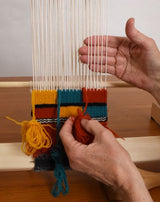
In weaving, colour isn't just decorative. The interaction between warp and weft threads can create subtle optical blends, depth, and texture. Understanding the basics of colour theory helps you predict and control these effects for more intentional and beautiful results.
For a deeper exploration into how fibre and hue interact, the book Color and Fiber by authors Patricia Lambert, Barbara Staepelaere, and Mary G. Fry, is an excellent resource. This book delves into how colour behaves within different fibres and textures, ideal for weavers who want to elevate their craft scientifically and artistically.
Understanding the Colour Wheel

At the heart of colour theory lies the colour wheel, a circular diagram that maps the relationships between colours. It's divided into three main categories:
- Primary colours: Red, blue, and yellow. These colours cannot be made by mixing others.
- Secondary colours: Green, orange, and purple, created by mixing two primary colours.
- Tertiary colours: Created by mixing a primary colour with a neighbouring secondary colour (e.g. blue-green or red-orange).
When selecting yarns, having a basic understanding of the colour wheel can help you build harmonious combinations and avoid clashing tones that may not blend well in your weave.
If you’d like a practical guide that bridges colour theory with fibre art design, Color and Texture by Tamara Poff is a wonderful book to keep at your side. It includes weaving-specific exercises that help you explore texture, tone, and value through hands-on projects.
Warm and Cool Colours
Colours are often classified as warm or cool depending on their undertones.
- Warm colours (reds, oranges, yellows) create a sense of energy, warmth, and movement. They tend to stand out and draw the viewer's eye.
- Cool colours (blues, greens, purples) evoke calmness, balance, and depth. They usually recede into the background, making them excellent for grounding your design.
When weaving, consider using warm colours to highlight a pattern or focal area and cool colours to create a soothing backdrop. Balancing these temperature groups adds visual interest and dimension.
For weavers who love exploring the emotional and expressive side of colour, Deep Color by Keith Recker offers inspiring insights into the cultural and psychological impact of colour. It’s perfect for those who want their textiles to tell a deeper story.
Complementary and Analogous Colour Schemes
There are several colour schemes you can use to guide your palette choices:
Complementary Colours

These are colours found opposite each other on the colour wheel (such as blue and orange, or red and green). When used together, they create strong contrast and vibrant results. For example, a teal warp with coral weft can create a lively woven texture full of energy.
Tip: If the contrast feels too bold, try using muted or pastel versions of complementary colours for a more balanced effect.
Analogous Colours

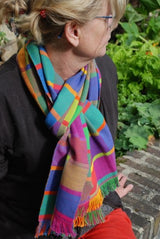
These are colours that sit next to each other on the colour wheel (like blue, blue-green, and green). They naturally blend well, creating a harmonious and cohesive look. This scheme works beautifully for subtle, tonal weaves—perfect for scarves or table linens.
Monochromatic Colours

This scheme uses different shades, tints, and tones of a single colour. For instance, working with multiple blues, from pale sky to deep navy, can create a sophisticated and unified design.
The Role of Value and Contrast
Value refers to how light or dark a colour is. In weaving, contrast in value can make or break your design. High contrast (light warp and dark weft) makes patterns stand out clearly, while low contrast creates soft transitions and a more blended appearance.
When planning your project, squint at your yarns or take a black-and-white photo. This helps you see the tonal values without the distraction of hue. A well-balanced mix of light, medium, and dark values can bring your piece to life.
How Texture and Structure Affect Colour
Colour in weaving isn't just about pigment—it's also about how the threads interact. Texture, yarn thickness, and weave structure all influence how colour is perceived.
- Satin and twill weaves reflect light differently, making colours appear more vibrant or muted.
- Textured yarns, such as boucle or slub, add dimension, breaking up solid colour areas.
- Blending threads of different hues in warp and weft can produce optical mixing, similar to pointillism in painting.
Experimenting with these variables can yield surprising and delightful colour effects that elevate even the simplest weave.
Using the Colour Wheel in Practice

Here's a simple step-by-step process to help you apply colour theory in your weaving:
- Choose your base colour – Start with a yarn colour you're drawn to or that fits your project's purpose.
- Identify its complementary or analogous partners – Use a colour wheel to find suitable pairings.
- Consider value contrast – Ensure your warp and weft aren't too similar in lightness, or your pattern may disappear.
- Test with yarn wraps or samples – Wind your chosen yarns on a card side by side or weave a small sample to preview how they interact.
- Adjust and refine – Tweak your selections until you achieve the desired balance of harmony and contrast.
Colour and Emotion in Weaving

Colours carry emotional weight. Using them intentionally can help communicate the mood or story behind your piece.
- Red: Energy, passion, warmth
- Blue: Tranquillity, trust, serenity
- Green: Growth, harmony, nature
- Yellow: Optimism, light, joy
- Purple: Creativity, mystery, luxury
- Brown and neutrals: Stability, comfort, grounding
Consider how you want your finished work to feel, and then build your palette to match that emotional intention.
Practical Colour Tips for Weavers
- Use a neutral yarn as a buffer – Shades like grey, cream, or beige can soften transitions between strong colours.
- Mind the lighting – Always assess your yarns in natural daylight, as artificial light can alter perception.
- Keep samples – Document your warp and weft combinations in a colour notebook for future inspiration.
- Don't fear boldness – Sometimes, the most striking weaves come from unexpected colour pairings.
Experiment, Observe, and Enjoy
Colour theory provides a foundation, but the true joy of weaving lies in experimentation. Try unexpected combinations, play with yarn textures, and let your instincts guide you. Even if something doesn't turn out as planned, you'll gain valuable insights for your next project.

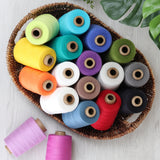
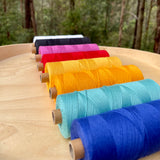
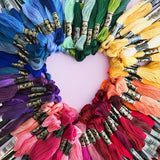
To make colour exploration even easier, explore our Yarn Colour Packs. Each curated pack includes beautifully coordinated shades, perfect for experimenting with colour harmony or building confidence with new palettes. They’re ideal for sampling, small projects, or planning your next big weave.
Every weaver develops their own sense of colour over time—what feels balanced, what feels daring, and what feels uniquely you.
So next time you're planning a warp, reach for your colour wheel and your yarn stash, and start experimenting; you might just find your new favourite palette.
Ready to put your colour theory into practice?
Discover our extensive range of yarns for weaving at Thread Collective and start crafting vibrant, harmonious designs today.
Share this article on your favorite platform:
Table of Contents
- What Is Colour Theory?
- Understanding the Colour Wheel
- Warm and Cool Colours
- Complementary and Analogous Colour Schemes
- The Role of Value and Contrast
- How Texture and Structure Affect Colour
- Using the Colour Wheel in Practice
- Colour and Emotion in Weaving
- Practical Colour Tips for Weavers
- Experiment, Observe, and Enjoy
