





Knitting Gauge Swatching: Why It Actually Matters (And How to Do It Properly)
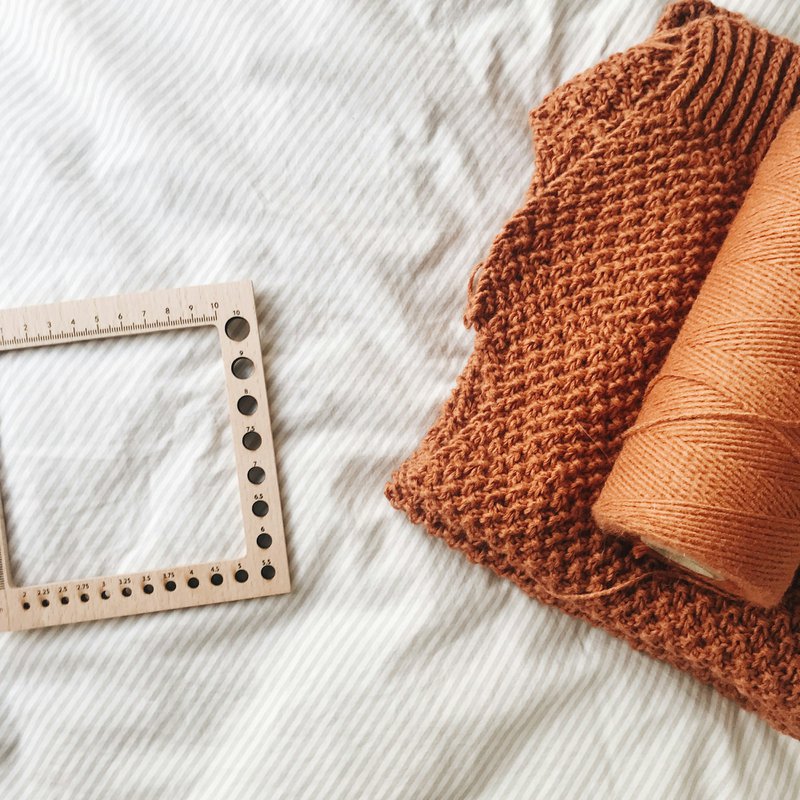
If you've ever been keen to cast on a new knitting project, you've probably been tempted to skip the knitting gauge swatch. After all, it feels like an extra step standing between you and the fun part of knitting. Many knitters convince themselves that their tension is "close enough" or that they can simply adjust as they go.
Unfortunately, that shortcut often leads to disappointing results.
A jumper that ought to fit comfortably turns out too tight. A cardigan hangs far longer than expected. A carefully chosen amount of yarn suddenly isn't enough to finish the project. In many cases, the culprit is not the pattern, the yarn, or even your knitting skills. It's skipping the gauge swatch.
Learning to knit a proper gauge swatch is one of the most useful skills for any knitter. No matter what you're making, spending a bit more time at the start can save you hours of frustration later.
In this guide, we'll explain why knitting gauge matters, when you should swatch, how to knit an accurate knitting gauge swatch, and what to do if your gauge doesn't match the knitting pattern.
What Is Knitting Gauge?
Knitting gauge refers to the number of stitches and rows within a specific measurement, usually 10cm x 10cm (4 inches x 4 inches).
For example, a knitting pattern may specify:
22 stitches and 30 rows = 10cm in stocking stitch
This tells you exactly how dense or loose the knitted fabric should be.
The designer developed the pattern using this gauge, so every measurement, shaping instruction, and yarn estimate is based on achieving it.
If your gauge differs, your finished project will also differ.
Even being off by one or two stitches over 10cm can dramatically change the finished size of a garment.
Why Does Knitting Gauge Matter?
Many knitters understand what gauge is but still wonder whether it really makes a difference.
The short answer is yes.
Your Finished Size Depends on It
Most jumper patterns are graded across a range of sizes, not just one. Say a pattern lists a 100cm chest for the size you've chosen. If your knitting is slightly looser than the pattern gauge, you might not just end up a little big, you could end up knitting the equivalent of the next size or two up without meaning to.
The reverse is true if you knit tighter than the pattern gauge. You could work through an entire garment expecting it to fit, only to find you've effectively knitted a size or two smaller.
That's why gauge matters more than the size you pick off the chart. When knitting garments, gauge is essentially your measuring tape, and it decides which size you actually end up with, regardless of which size you cast on for.
Gauge Also Affects Fabric
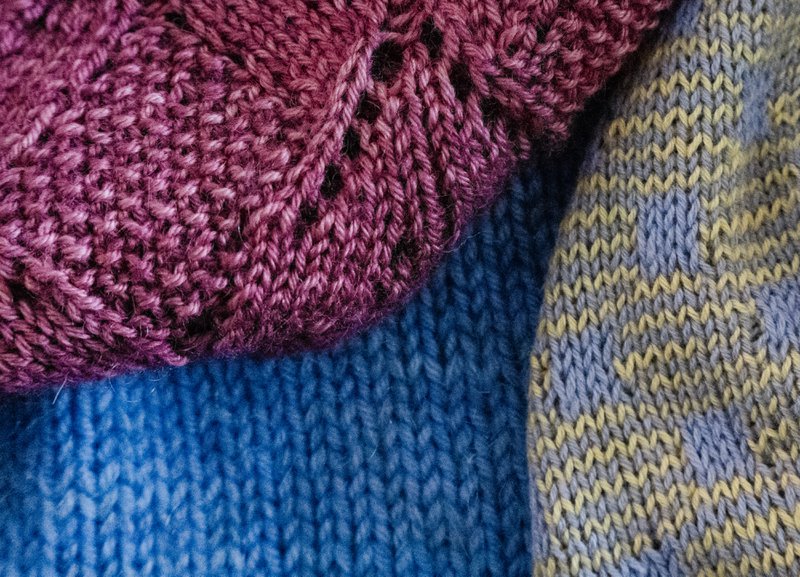
Matching stitch count isn't only about sizing.
Gauge also affects how your fabric drapes, stretches, feels, and how warm it is.
A loose gauge creates a softer, more fluid fabric.
A tighter gauge produces a firmer fabric that may hold its shape better but could also feel stiff.
Some projects intentionally use different gauges to create a particular look, but when following a pattern, matching the designer's intended gauge usually produces the best result.
It Helps Estimate Yarn Correctly
Most knitting patterns estimate yarn quantities based on the published gauge.
If your gauge is looser, you'll generally use more yarn because each stitch is larger.
If your gauge is tighter, you'll use less yarn but may end up with a garment that's too small.
Swatching reduces the risk of running out of yarn halfway through a project.
It Saves Time
Many knitters skip the gauge swatch because they want to save time.
Ironically, skipping it often creates much more work.
Imagine spending forty hours knitting a cardigan only to discover that the sleeves are far too short or the body is two sizes too large.
A twenty-minute knitting gauge swatch suddenly seems like a very worthwhile investment.
Does Every Knitting Project Need a Gauge Swatch?
Not necessarily.
Projects like scarves, blankets, dishcloths, and some shawls are generally more forgiving.
If the finished measurements aren't critical, exact gauge becomes less important.
However, you should always knit a gauge swatch when making:
- Jumpers
- Cardigans
- Socks
- Hats that need precise sizing
- Gloves and mittens
- Children's clothing
- Fitted accessories
- Test knits
Whenever fit matters, gauge matters too.
Why Your Gauge Might Differ
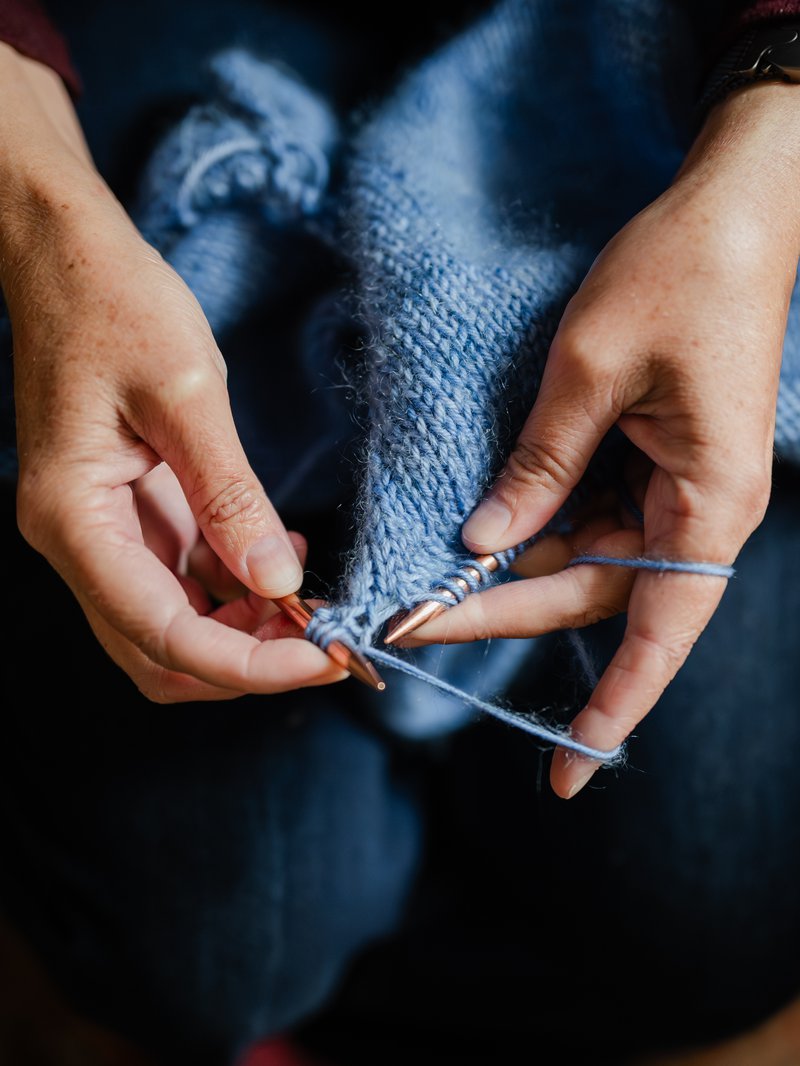
Many knitters assume they should automatically match the pattern gauge if they use the recommended yarn and needles.
In reality, every knitter has unique tension.
Plenty of factors can affect your gauge.
Knitting Style
Some knitters naturally knit tightly while others knit loosely.
Neither approach is wrong.
Patterns are designed around averages, not individual knitting habits.
Yarn Choice
Even within the same weight category, yarns behave differently.
A lofty wool will knit differently from smooth cotton, while alpaca may relax after washing. Silk may drape more, while plant fibres often have less elasticity than wool.
Always remember that substituting yarns almost always requires swatching.
Needle Material
Wooden needles often grip yarn more than metal needles. However, metal needles do allow stitches to glide more easily.
Changing needle materials may subtly affect your gauge.
Your Mood and Environment
Believe it or not, stress, tiredness, excitement, and even room temperature can influence your knitting tension.
Many knitters notice that their evening knitting differs from their weekend knitting.
How to Knit a Proper Gauge Swatch
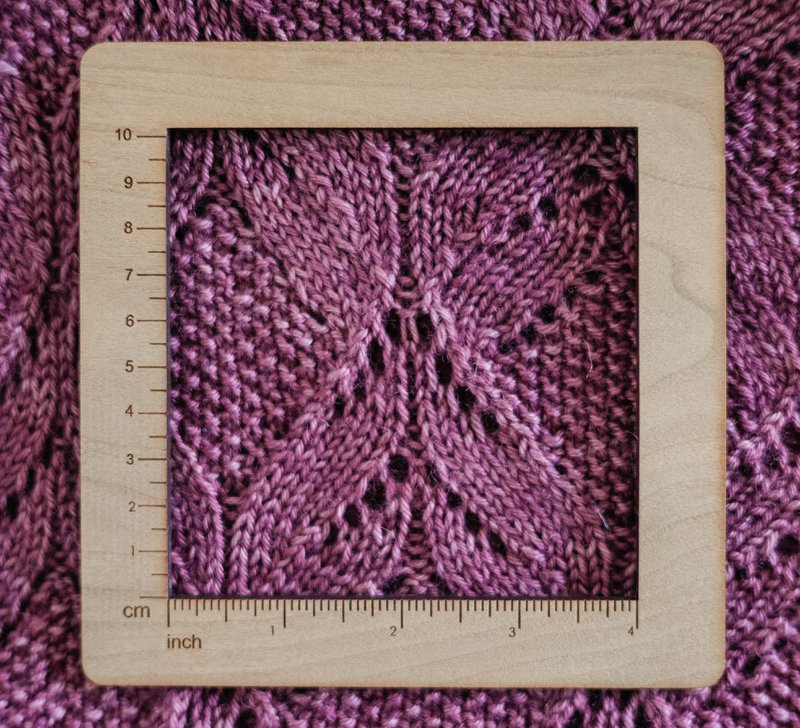
A proper gauge swatch is much more than casting on enough stitches for exactly 10cm.
Here's how to do it correctly.
1. Use the Same Yarn
Always use the same yarn intended for the project. Even yarns with identical weights can produce different gauges.
2. Use the Same Needles
Begin with the needle size recommended in the pattern.
Remember that this is only a starting point. Many knitters eventually need to go up or down a needle size.
3. Make Your Swatch Larger Than 10cm
This is one of the biggest mistakes beginners make. Edge stitches distort the fabric. Instead of knitting exactly 10cm, create a swatch around 15 to 20cm square. This provides a larger central area for accurate measuring.
4. Knit the Correct Stitch Pattern
If the pattern specifies stocking stitch, knit stocking stitch. If it uses moss stitch, cables, lace, or textured patterns, swatch those instead. It's important to remember that different stitch patterns produce different gauges.
Should You Wash Your Gauge Swatch?
Absolutely.
Blocking and washing often change knitted fabric.
Wool may bloom, cotton may relax, linen softens, and superwash wool often grows after washing.
Measure your gauge only after washing and drying the swatch exactly as you intend to care for the finished garment.
Skipping this step can bring unpleasant surprises after your first wash.
How to Measure Knitting Gauge
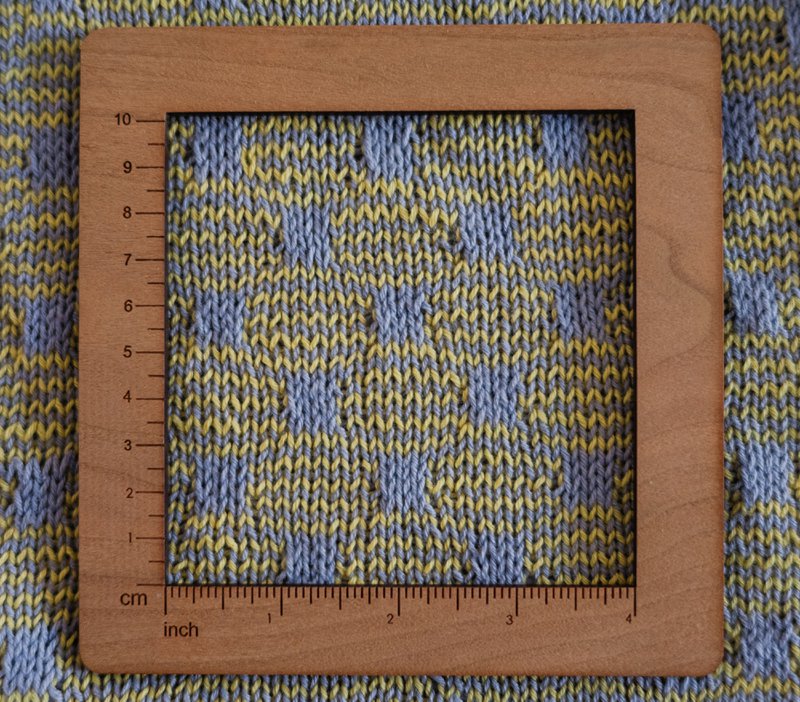
- Lay your dry swatch flat without stretching it.
- Use a knitting gauge ruler or measuring tape.
- Count the stitches across exactly 10cm.
- Then count the rows over the same distance.
- Avoid measuring near the edges. Instead, measure in the centre where the fabric is most consistent.
For example:
If your pattern specifies “22 stitches over 10cm” and you count “24 stitches over 10cm,” this indicates your knitting is tighter than the designer's.
Meanwhile, if you count “20 stitches over 10cm,” this means your knitting is looser.
How to Fix Your Gauge
Fortunately, correcting gauge is usually straightforward.
If you have too many stitches over 10cm, your stitches are too small. This can be corrected by moving to a larger needle and/or adjusting your grip and tension.
If you have too few stitches, your stitches are too large, and you may benefit from moving down to a smaller needle and/or adjusting your tension.
Repeat the swatch until both stitch and row gauge are as close as possible.
What About Row Gauge?
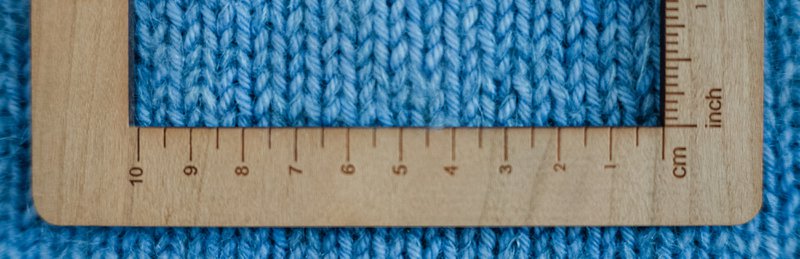
Many knitters focus only on stitch gauge, but row gauge matters too, especially for garments with set-in sleeves, colourwork, or carefully planned shaping. Fortunately, many modern knitting patterns supply measurement checkpoints rather than relying solely on row counts, so if your stitch gauge matches but your row gauge differs slightly, you can often compensate by measuring the garment as you knit rather than counting rows.
If the difference is more significant, start by checking your tension on the purl side, since many knitters purl more loosely or tightly than they knit without realising it. Switching needle material can also shift row gauge more than it shifts stitch gauge, so a change from metal to wood (or the reverse) is worth trying before you reach for a different needle size, which will fix row gauge but shift your stitch gauge at the same time. Where possible, work to a measurement instead of a row count, particularly for sleeves and body length, and keep in mind that stitch gauge usually matters more for overall fit. A small row gauge mismatch can often be absorbed by working a few more or fewer rows before shaping, as long as you're checking your measurements as you go.
Common Gauge Swatching Mistakes
Even experienced knitters occasionally make these mistakes.
The most common include:
- Measuring before washing.
- Swatching too small.
- Measuring edge stitches.
- Using different needles from the project.
- Knitting faster or slower than normal.
- Ignoring row gauge.
- Assuming one brand's DK weight matches another exactly.
Avoiding these simple mistakes dramatically improves accuracy.
Should You Swatch in the Round?
If you're knitting socks, hats, sweaters, or sleeves in the round, the answer is yes.
Many knitters have different tension when knitting flat compared with knitting in the round.
This happens because purl stitches are often worked differently from knit stitches.
A flat swatch may not accurately represent your circular knitting gauge.
There are several methods for creating a circular gauge swatch without knitting a complete tube.
Although they require a little more yarn, they usually produce much more reliable results.
What If You Can Never Match the Pattern Gauge?
Occasionally, despite trying several needle sizes, you cannot achieve the published gauge while creating fabric you like.
That's perfectly normal.
In this situation, consider:
- Trying a different needle material
- Using an alternative yarn with similar characteristics
- Selecting a different size pattern based on your gauge
- Looking for designer notes about yarn substitutions
Remember that achieving beautiful fabric is just as important as matching numbers.
Does Experience Mean You Can Skip Swatching?
Even expert knitters swatch.
Professional designers, sample knitters, and experienced makers routinely knit gauge swatches before starting new projects.
Different yarns, needles, stitch patterns, and even personal knitting tension can vary from project to project.
Swatching isn't something beginners do because they're inexperienced.
It's something experienced knitters do because they know how important it is.
Tips for Making Gauge Swatching Less Tedious
If you dislike swatching, you're not alone.
These simple habits can make the process come across as more worthwhile.
- Label your swatches with the yarn, needle size, and date.
- Keep them organised in a binder or storage box for future reference.
- Treat swatches as opportunities to practise unfamiliar stitches before beginning the project.
- Reuse leftover swatches for mending, embroidery practice, or comparing yarn behaviour over time.
- If your pattern includes pockets, particularly pockets knit flat before being sewn or picked up, treat the first one as a bonus gauge check. It's worked under the exact conditions you'll use for the rest of the garment, so you can measure it against your gauge before committing to the body or sleeves, and still have time to adjust your needle or tension if it's off.
Think of each swatch as adding to your personal knitting library. Over time, you'll build a valuable record of how different yarns and needle sizes behave in your hands.
Frequently Asked Questions About Knitting Gauge
Can I use a different yarn if I match the gauge?
Often, yes. Matching gauge is essential, but it's also important to consider fibre content, drape, elasticity, and the way the yarn behaves after washing. Two yarns can produce the same gauge while creating fabrics with very different characteristics.
Why does my gauge change during a project?
It's perfectly normal for your knitting tension to change while you get more comfortable with a pattern. Fatigue, stress, or even switching knitting locations can also affect your gauge. Taking occasional measurements during larger projects can help you catch changes before they turn significant.
Is gauge important for beginner knitters?
Absolutely. Learning to understand gauge early helps build confidence and leads towards more successful projects. It's much easier to develop good habits now than to correct sizing problems later.
Ready to Knit? Let’s Get Started!
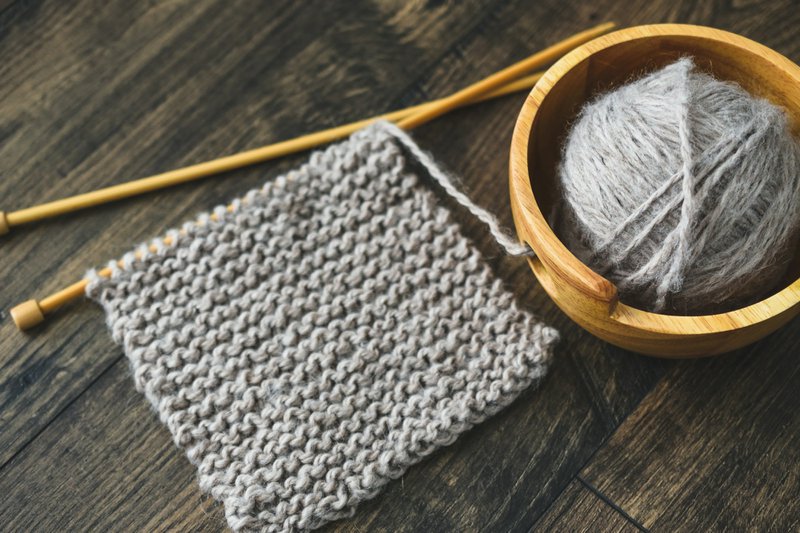
Gauge swatching may never be the most exciting part of knitting, but it is one of the most rewarding. Spending a little time on a knitting gauge swatch can save hours of knitting, prevent costly mistakes, and give you confidence that your finished project will fit and look as intended.
Rather than thinking of a gauge swatch as an obstacle, treat it as the first step towards a successful project. It gives you the chance to get to know your yarn, test your fabric, and make adjustments before spending time on the full pattern. That small investment pays off with garments and accessories you'll be proud to wear or gift.
If you're planning your next knitting project, Thread Collective offers a selectively curated range of premium knitting yarns, knitting needles, notions, and fibre tools from leading brands around the world. Whether you're knitting your first jumper or your fiftieth pair of socks, starting with quality materials makes gauge swatching easier and your finished project even more enjoyable.
Share this article on your favorite platform:
Table of Contents
- What Is Knitting Gauge?
- Why Does Knitting Gauge Matter?
- Gauge Also Affects Fabric
- It Helps Estimate Yarn Correctly
- It Saves Time
- Does Every Knitting Project Need a Gauge Swatch?
- Why Your Gauge Might Differ
- How to Knit a Proper Gauge Swatch
- Should You Wash Your Gauge Swatch?
- How to Measure Knitting Gauge
- How to Fix Your Gauge
- What About Row Gauge?
- Common Gauge Swatching Mistakes
- Should You Swatch in the Round?
- What If You Can Never Match the Pattern Gauge?
- Does Experience Mean You Can Skip Swatching?
- Tips for Making Gauge Swatching Less Tedious
- Frequently Asked Questions About Knitting Gauge

1 comment
Thankyou I do not knit but crochet and I imagine the swatch is just as important I most definitely am going to do one next project I found the article interesting and informative