














Mastering Knitting Tension: How to Knit More Consistently
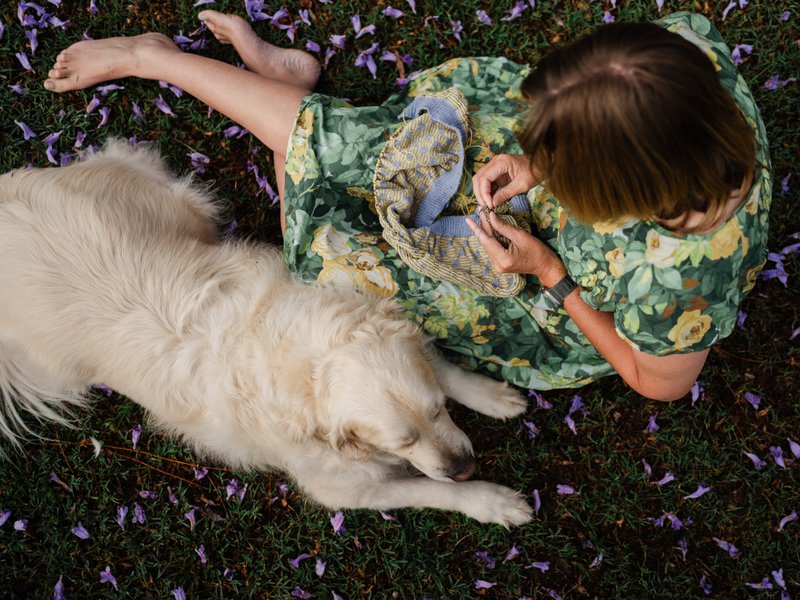
Have you ever finished a knitting project and noticed that some parts look tighter than others? Maybe your ribbing pulls in more than you expected, your stockinette looks uneven, or one sleeve turns out a bit bigger than the other.
Tension, also known as gauge when measured, is one of the most important skills for knitters. Keeping your tension steady makes your stitches even, improves how your projects look, and helps your garments fit well. Beginners often focus on learning knit and purl stitches, but experienced knitters know that controlling knitting tension is what turns basic fabric into polished, professional-looking pieces.
Consistent tension is a learnable skill. With the right tools, some targeted practice, and an understanding of what causes tension to shift, you can improve steadily with each project.
In this guide, we'll look at what knitting tension is, why it matters, what causes uneven tension, and practical tips to help you knit more evenly and with confidence.
What Is Knitting Tension?
Knitting tension refers to how tightly or loosely you hold and work your yarn as you make stitches.
Every knitter develops their own way of holding the yarn. Some knit tightly and make compact stitches, while others knit loosely and create a softer, more open fabric.
Tension affects:
- The size of your finished project
- The drape of the fabric
- Stitch definition
- Pattern accuracy
- The overall appearance of your knitting
Even if two knitters use the same pattern, yarn, and needles, their finished projects can turn out differently just because their tension differs. That is why most knitting patterns include a gauge measurement, so you can check your tension against the designer's before you cast on, and make necessary adjustments.
Why Consistent Knitting Tension Matters

Perfect tension isn’t about knitting tightly or loosely; it’s about consistency.
When your tension stays steady throughout a project, you’ll see several benefits.
More Professional-Looking Fabric
Even stitches make your fabric look smooth and attractive. Consistent tension helps stockinette fabric lie flat and makes textured stitches stand out clearly.
Better Garment Fit
A jumper knit with uneven tension might be too big in some places and too small in others. Keeping your tension steady helps your finished project match the pattern's measurements.
Easier Stitch Counting
Uneven tension makes it harder to count rows, spot pattern repeats, or pick up mistakes early. Even tension makes your knitting much easier to read.
Improved Confidence
Many knitters find that learning to control their tension makes knitting more enjoyable. Projects become more predictable, and mistakes are easier to spot and fix before they become a problem.
Common Causes of Uneven Tension

Before you can improve your knitting tension, it helps to understand what causes it to shift in the first place.
Holding Yarn Differently
One common reason is changing how you hold the yarn while you work. You might grip the yarn tightly when concentrating and loosen off when you relax. You could even be inadvertently changing how you wrap the yarn around your fingers to tension. These small changes can show up as visible differences in your fabric.
Switching Needle Types
Changing needle materials can noticeably affect your tension.
- Metal needles tend to be slippery
- Wooden needles provide more grip
- Carbon fibre needles offer a balance between the two
If you switch needle materials between projects and swatch to adjust, the difference is manageable. Where it becomes a real problem is switching mid-project, or working across different needle sizes within the same project, as is common with sweaters and beanies. In those cases, a tension shift can alter your finished fabric in ways that are hard to fix later. KnitPro needles are available in a range of materials and sizes, which makes it easier to keep your needle choice consistent throughout a project.
Stress and Fatigue
How you feel physically and emotionally can affect your knitting. Many knitters unconsciously tighten their grip when stressed or tired. Relaxed knitting sessions tend to produce looser, more even stitches.
Different Stitch Patterns
Some stitch patterns naturally affect tension. Ribbing, cables, lace, and colourwork can each pull your stitches tighter or looser than plain stockinette. You might knit one section easily, then struggle to keep the same tension when the pattern changes.
Taking Long Breaks
Coming back to a project after several weeks often means a tension shift until your hands settle back into the rhythm.
Understanding Gauge and Tension
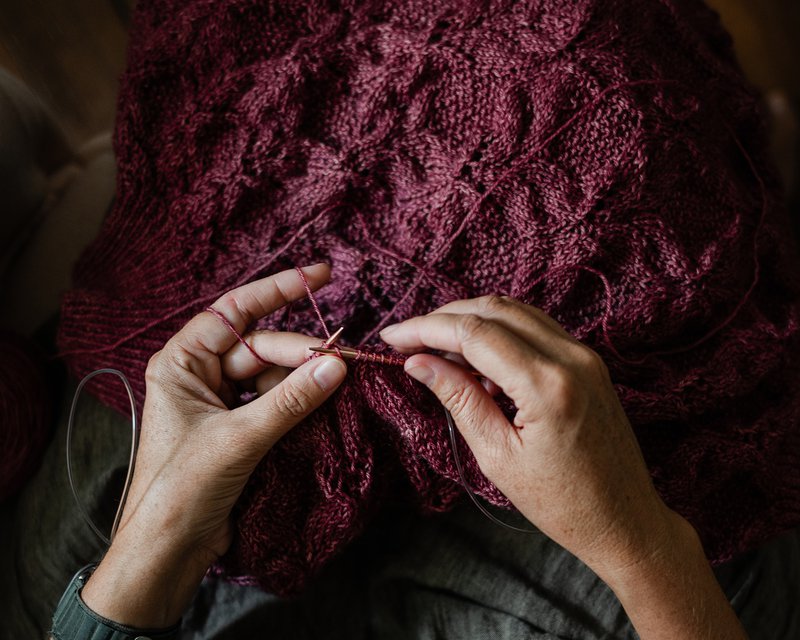
Tension is about how you knit. Gauge is the measurement of the fabric you produce.
Patterns will usually provide the gauge for a 10 cm square.
For example:
22 stitches and 30 rows = 10 cm in stockinette stitch.
If your knitting tension is different, your gauge will be different too.
Why Gauge Swatches Matter
Many knitters skip making a swatch because they want to get started. Taking the time to check your gauge first, though, can save hours of frustration later.
A swatch lets you:
- Check your tension against the pattern
- Test different needle sizes to meet the gauge
- Evaluate how the fabric drapes
- Practise unfamiliar stitch patterns before committing to a full project
This is especially worth doing when you are working with premium yarns like Knitting for Olive, ITO, Malabrigo, or Ashford. Getting the right fabric feel matters with yarns like these.
Finding a Comfortable Yarn Hold
Every knitter develops their own way of controlling yarn. The most important thing is consistency, not copying someone else's technique. Your hands and skin are unique, so what works for another knitter may need some adapting to get the same results for you.
Ask yourself:
- Is the yarn flowing smoothly?
- Are your hands relaxed?
- Can you knit comfortably for extended periods?
If you can answer yes to those, you are probably doing things right. Try not to grip the yarn too tightly. If your hands are tense, your stitches will reflect that.
Establish a Knitting Rhythm
Many experienced knitters keep their tension steady by finding a natural rhythm as they work.
Try to:
- Sit comfortably
- Keep your movements relaxed
- Knit at a natural pace
- Avoid rushing through sections
A steady rhythm helps the yarn move smoothly through your fingers. Think of knitting as a fluid, repeating motion rather than a race to the finish.
Pay Attention to Needle Size
Sometimes tension problems come down to the wrong needle size.
If you tend to knit tightly, try going up a needle size. If you knit loosely, try going down a size to help your stitches stay even. KnitPro interchangeable needle sets make it easy to experiment until you find the combination that hits your target gauge.
Many knitters find that the needle size that works for them is not always the one the pattern suggests, and that is completely normal and why swatching is so important.
Practise with Smooth, Predictable Yarns
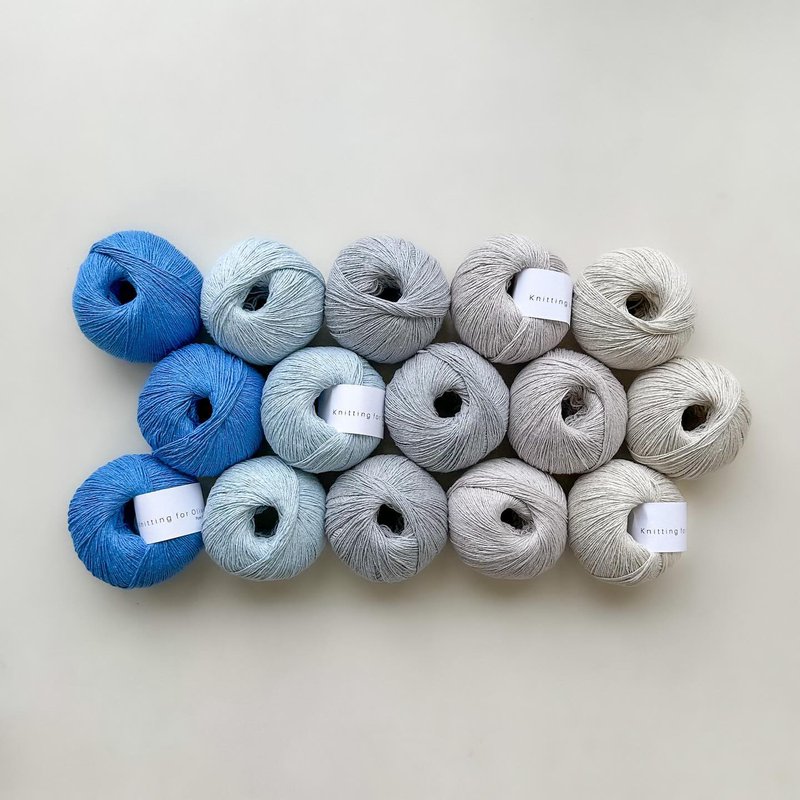
Not every yarn is suited to practising tension. Beginners generally do best with smooth yarns that show stitches clearly.
Good options include:
- Knitting for Olive Merino
- Knitting for Olive Pure Silk
- Ashford Double Knit
- Ashford Triple Knit
- ITO Kinu
- Malabrigo Rios
These yarns make it easy to see each stitch and spot tension problems as they develop. Highly textured, fluffy, or novelty yarns can hide your stitches and make it harder to assess whether your tension is consistent or not.
Learn to Relax Your Hands
One of the most common improvements for knitters working on tension is simply learning to relax.
Watch for signs like:
- Sore fingers
- Hand cramps
- Wrist discomfort
- Tight shoulders
These often indicate you are holding too much tension in your body, which flows straight into your stitches.
Try:
- Stretching your hands and wrists regularly
- Taking short breaks every 20 to 30 minutes
- Adjusting your seating position
- Using ergonomic needles if standard ones cause discomfort
Relaxed hands tend to produce even stitches.
Managing Tension in Ribbing
Ribbing trips up a lot of knitters. Loosely knit stitches sitting next to purl columns is a common issue, particularly in 1x1 ribbing.
To improve ribbing tension:
- Keep yarn positioning consistent as you switch between knit and purl
- Avoid pulling excessively after purl stitches
- Practise ribbing on its own before incorporating it into a larger project
- Try a smaller needle size if your ribbing consistently comes out looser than the main fabric
With practice, ribbing becomes noticeably more uniform.
Managing Tension in Colourwork
Colourwork introduces a specific tension challenge: unused yarns travel behind the work as floats. If those floats are too tight, your fabric will pucker. If they are too loose, your stitches will look uneven.
Tips for better colourwork tension:
- Spread stitches along the needle before carrying floats across
- Keep yarn management consistent across both colours
- Avoid pulling colours too tightly when picking them up
- Most knitters find they need to go up one or two needle sizes for colourwork, so swatching this section separately is worth the time.
Yarns with good stitch definition, such as Knitting for Olive Cotton Merino or Jamieson's of Shetland Spindrift, are excellent choices for developing colourwork skills.
Managing Tension in Lace Knitting
Lace can feel intimidating because yarn overs and decreases change the stitch structure throughout. The key is keeping your yarn control consistent from start to finish.
- Avoid tightening yarn overs as you work them
- Trust that blocking will open up the lace pattern once you finish
Many lace knitters find lightweight yarns such as ITO Sensai Silk Mohair or Knitting for Olive Soft Silk Mohair ideal for practising consistent tension.
The Importance of Blocking

What looks like poor tension is sometimes something that blocking can fix. Blocking helps even out stitches, relaxes fibres, improves drape, and enhances stitch definition.
Natural fibres respond particularly well to blocking. Stitches become noticeably more uniform after a good soak and pin-out, so it is worth building blocking into your process as a regular finishing step rather than an optional one.
Tracking Your Progress
Consider keeping a knitting journal where you record:
- Yarn used
- Needle size
- Gauge achieved
- Project notes
- Tension observations
Over time, you will start to notice patterns. You may discover that certain needle materials or yarn types consistently produce your best results. A binder works particularly well for this, as you can store your swatches alongside your notes, giving you a practical reference to come back to when planning future projects.
Exercises to Improve Knitting Tension
Like any skill, tension improves with deliberate practice.
Stockinette Squares
Knit multiple 10cm stockinette squares using the same yarn and needles. Compare them side by side and look for improvements in stitch consistency across each one.
Needle Comparison Swatches
Create swatches using wooden needles and metal needles with the same yarn. Notice how each material affects your tension.
Speed Variation Practice
Knit a few rows slowly, then a few at your normal pace. Compare the fabric. This helps you identify whether speed affects your tension.
Daily Warm-Up
Spend five minutes knitting before starting a major project. Many knitters find their tension settles after a short warm-up. You could use these warm-up periods to work on small items for yourself or a supply of gifts. These projects could include dish cloths, beanies and coasters.
Choosing Tools That Support Consistency
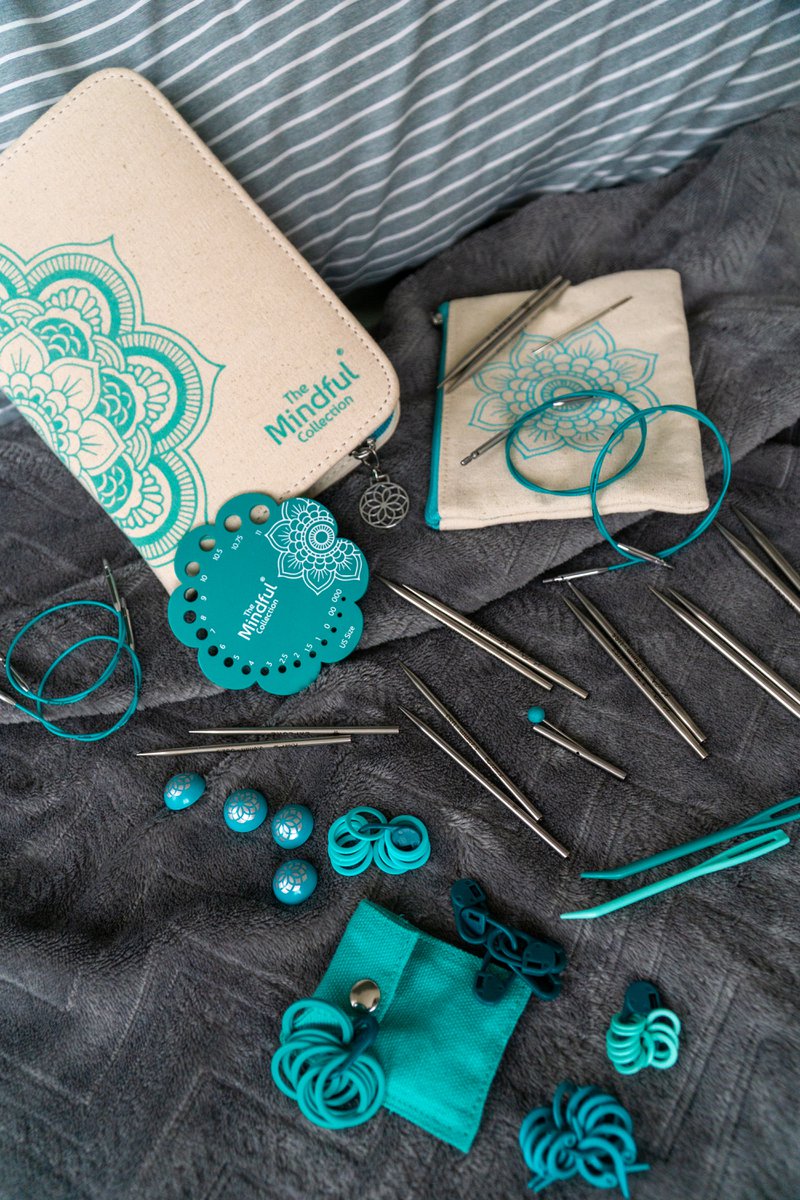
The tools you work with make a real difference to tension consistency. Quality needles and well-suited yarns make knitting feel smoother and more controlled.
At Thread Collective, you will find trusted brands, including:
Finding the right combination of yarn and needles for your hands can make your knitting more comfortable and your tension more consistent from project to project.
Building Better Knitting Tension
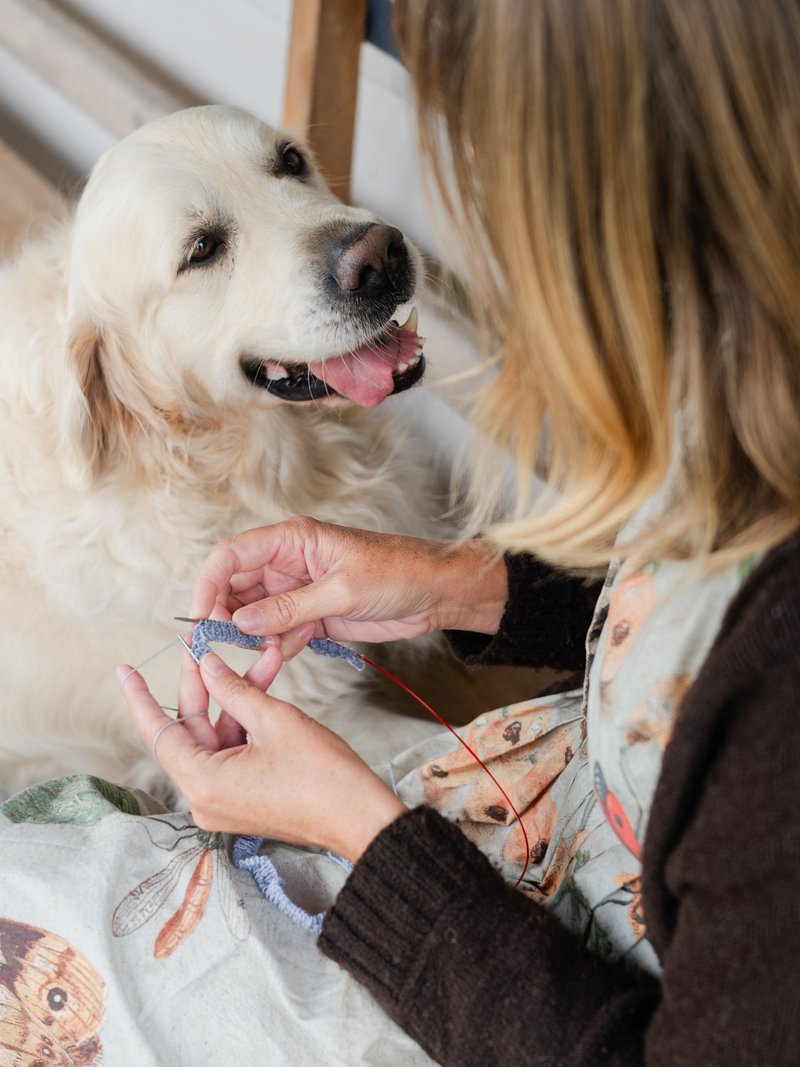
Getting good at tension takes time, even for experienced knitters. Switching yarns, trying new needle materials, or working a complex pattern can all throw things off temporarily. The goal is progress, not perfection, and every project teaches your hands something new.
Tension improves one project at a time. Small adjustments to your technique, yarn choice, or needles can make a real difference, and the more you knit, the more consistent your hands become. If you are ready to invest in tools that support that process, Thread Collective stocks a carefully chosen range of knitting yarns and needles from trusted brands, including KnitPro, Knitting for Olive, ITO, Malabrigo, and Ashford. Browse the full range of knitting supplies to find what suits your hands and your next project.
Share this article on your favorite platform:
Table of Contents
- What Is Knitting Tension?
- Why Consistent Knitting Tension Matters
- Common Causes of Uneven Tension
- Understanding Gauge and Tension
- Finding a Comfortable Yarn Hold
- Establish a Knitting Rhythm
- Pay Attention to Needle Size
- Practise with Smooth, Predictable Yarns
- Learn to Relax Your Hands
- Managing Tension in Ribbing
- Managing Tension in Colourwork
- Managing Tension in Lace Knitting
- The Importance of Blocking
- Exercises to Improve Knitting Tension
- Choosing Tools That Support Consistency
- Building Better Knitting Tension
