






























How to Scour Raw Wool Fleece: A Beginner-Friendly Step-by-Step Guide
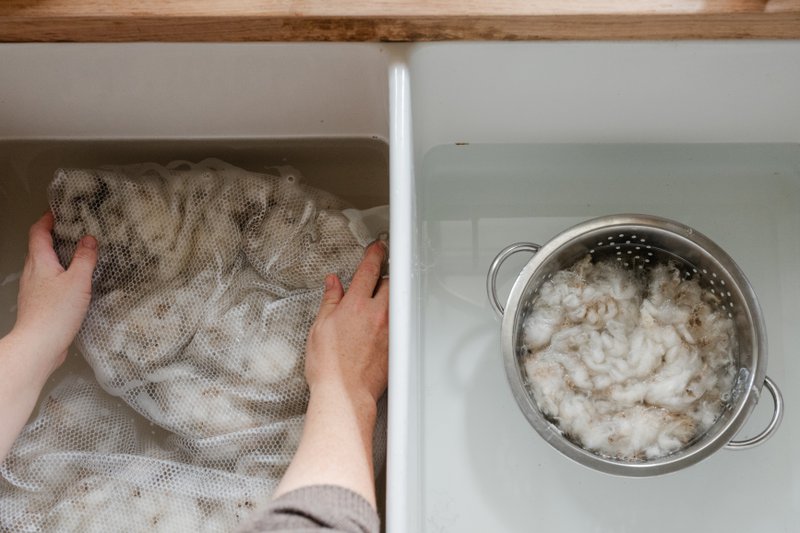
If you’ve ever picked up a freshly shorn fleece and wondered how to turn it into soft, spinnable fibre, learning how to scour, or wash, raw wool is one of the most important first steps.
Scouring removes grease, dirt, sweat salts, and vegetable matter from raw fleece, preparing it for carding, combing, and spinning. While the process may sound intimidating at first, it’s actually quite approachable when you use the right products and techniques.
In this tutorial-inspired guide, Samantha from Thread Collective and Olivia from Millennium Pastoral demonstrate how to scour a Merino fleece using Unicorn Clean’s Beyond Clean scouring detergent. The fleece featured in the tutorial was grown by Olivia’s son, making the process even more special and personal.
What Is Wool Scouring?
Scouring is simply washing raw fleece. Raw wool straight off the sheep contains lanolin (natural grease), dirt, dust, sweat salts (called suint), and vegetable matter. Scouring removes all of this and prepares the fibre for the next stages of preparation.
That said, you don't always want to strip the lanolin out completely. It's what gives wool many of its best qualities - it naturally sheds water and resists stains, which is why wool has always been used for outerwear and weatherproof garments. It also coats individual fibres, reducing friction and pilling over time, and it keeps the fibre flexible so it won't become brittle or break down. On top of that, lanolin is naturally antimicrobial, which is a big part of why wool resists odours so well.
A little lanolin left in the wool can make it easier to spin. The aim of scouring isn't to get the fleece squeaky clean - it's to get it clean enough to work with comfortably.
The exact amount of lanolin you choose to leave in is personal preference.
Why Proper Scouring Matters
Wool fibres are delicate. Agitation combined with heat and moisture causes felting, and once wool felts, it can't be unfelted. Keeping the wool still, maintaining consistent water temperatures, and handling it gently throughout makes the difference between clean, airy fibre and a matted clump.
Done well, scouring preserves the staple structure, keeps the fibre soft, and makes carding, combing, and spinning noticeably easier. It's worth taking the time to get it right.
The quality of your preparation shows in the finished yarn.
The Fleece Used in This Tutorial
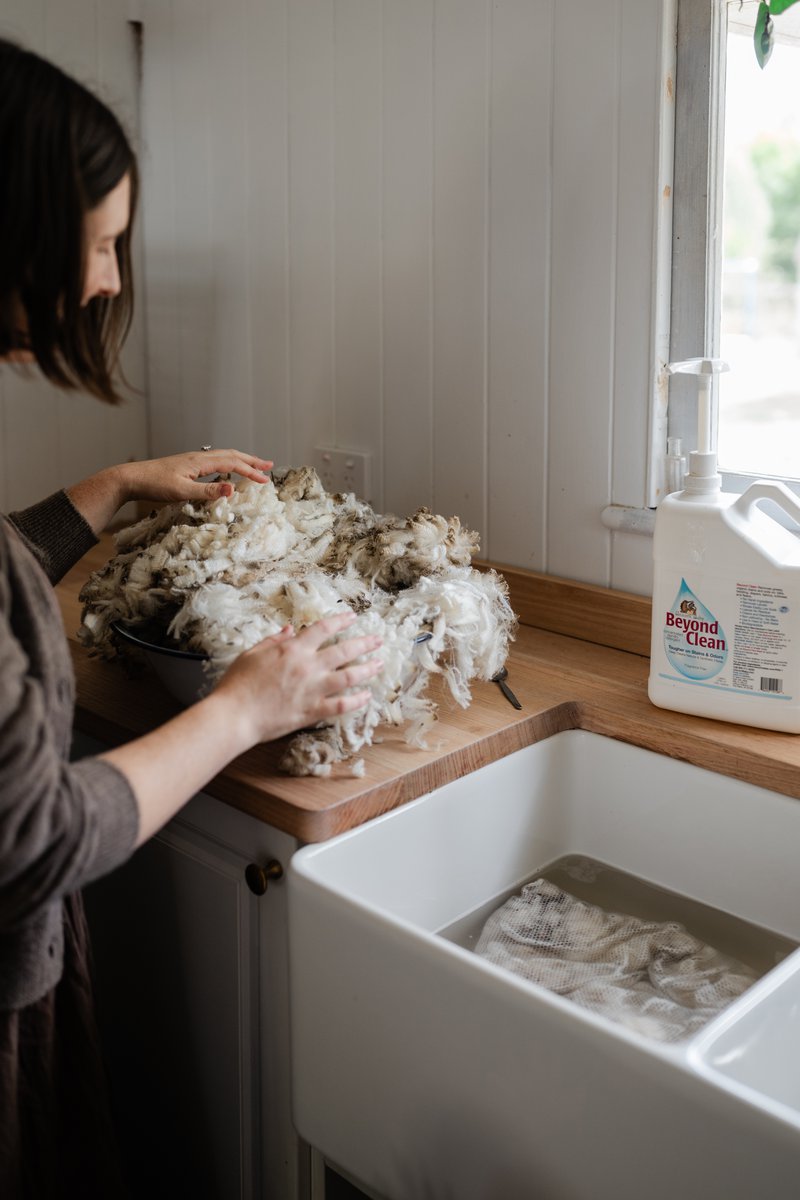
In the tutorial, Samantha and Olivia work with an uncoated Merino fleece. Although the fleece is relatively clean, it still has dirty tips, vegetable matter, greasy lanolin build-up, and some stained sections. This is a good real-world example of what most handspinners will encounter.
Supplies You’ll Need to Scour Wool
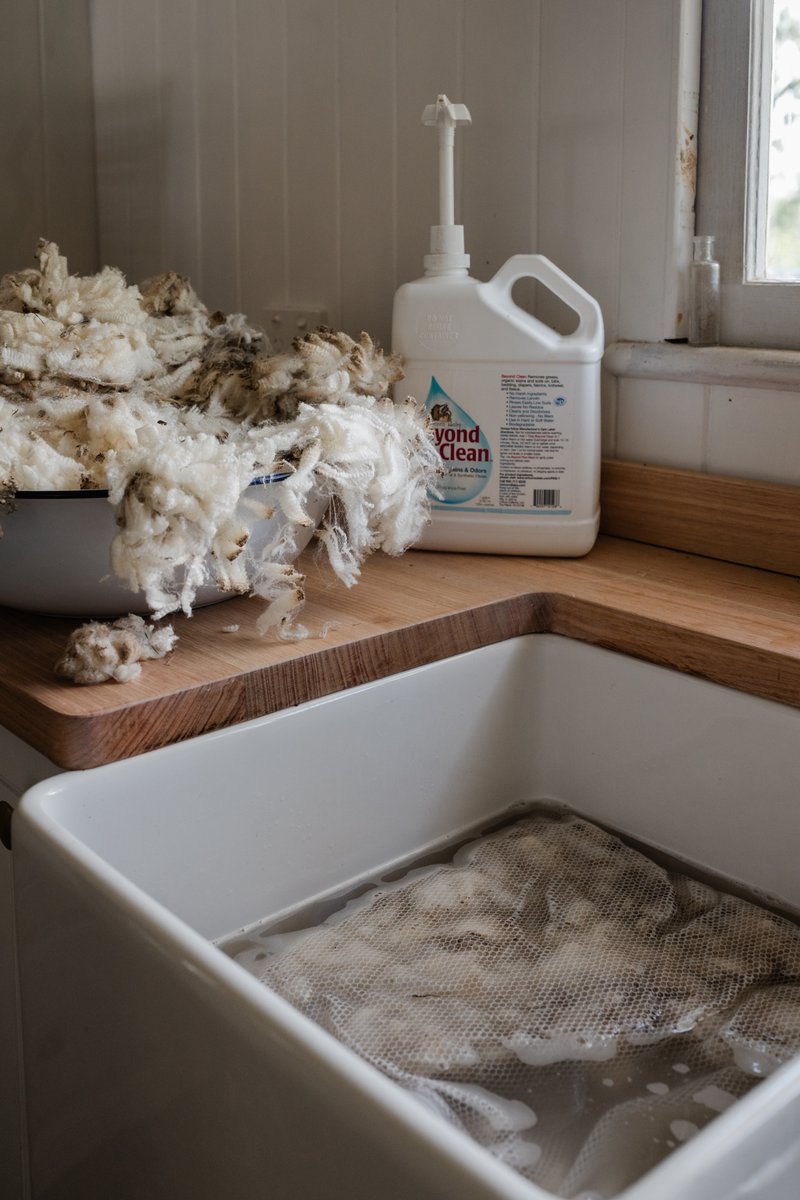
You don't need much to get started. Any raw sheep fleece will do, whether that's Merino or another breed.
For the detergent, Samantha uses Beyond Clean from Unicorn Clean. It's formulated specifically for scouring raw wool, alpaca, and mohair, but it's also tough enough for cloth nappies, pet bedding, and stubborn stains. Unicorn Power Scour is the same formulation with a subtle lavender scent added — either works well for fleece washing.
If you're working with already-clean wool, finished yarn, or a garment that just needs a refresh, Fibre Wash and Fibre Rinse are the better choice. These are designed for maintenance and conditioning rather than heavy-duty scouring.
Helpful Equipment for Scouring Wool
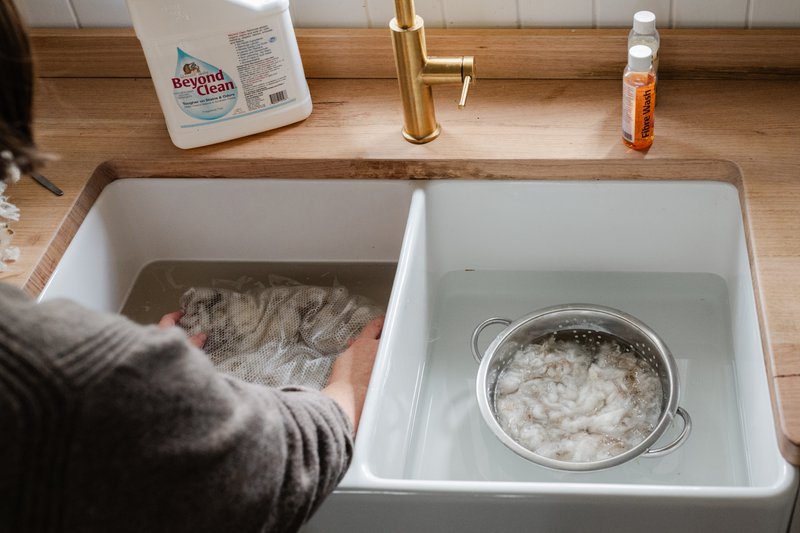
You don't need fancy equipment. A large basin or laundry sink works well. Also, colanders are handy for small batches, while a delicates bag is better for larger ones as it supports the fleece during draining. You'll also want a couple of towels and a drying rack or mesh surface for afterwards.
Samantha doesn't normally scour in the kitchen sink as lanolin build-up over time isn't great for household pipes. A laundry sink, buckets or an outdoor drainage system is a better option.
Understanding Lanolin in Raw Wool
Lanolin is the natural wax (also called wool grease) that sheep produce to protect their fleece from the elements. During scouring, you'll notice the water first turning yellow, or brown and cloudy. That's the excess dirt, suint, and grease lifting away. The milky colour you often see in later scours, once the dirt and stains are gone, is nothing to worry about; you actually want some lanolin to stay in the fibre. This residual lanolin will protect your finished yarn or fibre project, as it once protected the wool on the sheep. It will prevent the fibre from becoming brittle by keeping it conditioned, and it will naturally aid in repelling water, stains and odour. If you wish to strip most or all lanolin out, repeat scours until the water is clear.
Fun fact: lanolin is also widely used in skincare products because of its moisturising properties.
A Step-by-Step Guide on How to Scour Raw Wool Fleece
Step 1: Sort and Inspect the Fleece
Before washing, take a few minutes to look the fleece over. You're checking for heavily stained areas, matted sections, dirty tips, second cuts, and any obvious vegetable matter. Removing the worst of it before the fleece hits the water makes the whole scouring process easier.
In the tutorial, Samantha points out some stained tips and dirty ends - most of this will lift during washing, but if you have time, it's worth flicking the tips with a flick carder first. This step was skipped in the tutorial due to time constraints, but it makes a real difference: it opens the fleece out, dislodges a lot of the dirt and vegetable matter, and lets the water penetrate more effectively during the scour.
Step 2: Prepare Hot Water
Temperature control is the most important part of scouring. Fill your basin with hot water straight from the tap. Aim for around 60°C (140°F), hot enough to melt the lanolin away from the fibre, but not boiling.
Sudden temperature changes, particularly hot to cold, are a big cause of felting, so the goal throughout the whole process is to keep temperatures steady.
Note: You can generally move from cold to hot safely, but not hot to cold!
Step 3: Add Wool Scouring Detergent
Once the basin is filled, add your wool scour and let it dissolve evenly through the water before adding the fleece. Samantha uses Beyond Clean at a ratio of 1 tablespoon per 3.8 litres (1 gallon) of water.
Make sure the fleece has plenty of room to move in the water. A crowded basin means the water can't circulate properly, and you'll end up needing more scours to get the same result.
Step 4: Gently Place the Wool Into the Water
Lower the fleece in carefully. Don't stir, scrub, or press it down forcefully; just let it settle. If needed, lightly press the fleece beneath the surface to ensure saturation (air bubbles will slow or stop at this point), but that's as much handling as it needs at this stage. Excessive handling will contribute to felting.
Step 5: Allow the Wool to Soak
Let the fleece soak for 15 to 30 minutes. As it soaks, the water will become cloudy, brown or yellow as the lanolin and dirt lift out. Most fleeces require more than one soak. If the water is anything other than milky or clear, give it another scour.
Step 6: Drain Carefully
Drain the water without squeezing, twisting, or running water directly onto the wool. A colander or delicates bag makes this easier - it supports the fleece while the water drains away.
Step 7: Repeat if Necessary
Many fleeces require multiple washes. If the water was not clear or milky, or the fleece still feels greasy, sticky, or still appears stained, repeat the process from steps 2 to 6 with fresh hot water and more scour.
The goal is clean wool that feels soft rather than sticky or oily.
Step 8: Rinse the Wool
Once the grease and dirt are removed, rinse the wool using water at a similar temperature. Again, avoid dramatic temperature changes. Consistent temperatures help prevent felting. The rinse water should gradually become clearer with each rinse.
Optional: Use Fibre Rinse for Extra Softness
Samantha also mentions using Fibre Rinse for additional conditioning.
This step is optional, but it improves softness, conditions the fibre, and leaves finished yarns feeling smoother - particularly good for fibre with low lanolin content or older fleece that has dried out over time.
Step 9: Dry the Wool Properly
Gently press out excess water (don't wring), then lay the fleece flat on towels or a drying rack. Good airflow helps. We recommend drying in the shade, out of harsh direct sunlight. Depending on the fleece and the weather, drying can take anywhere from a day to several days. Make sure it's fully dry before further processing or storing.
Common Mistakes When Scouring Wool
The most common issue is temperature - either using water that's too hot (which can damage the fibres) or letting it cool down too much during the soak. Grease needs warmth to release from the fibre, so if your water cools off too much, the grease can resettle. You can add hot water to bring the temperature back up rather than starting again. Be careful not to shock your wool by moving rapidly from hot to cold, as this can felt your fibre.
Agitation is the other big one. Movement combined with heat causes felting, so keep handling to a minimum throughout; when placing the fleece in, pressing it under, and especially when draining. Overcrowding the basin has a similar effect; if the wool can't move freely in the water, it won't clean evenly and will need more rounds.
Speaking of which, don't stop after one wash if the fleece is greasy or heavily stained. Most fleeces need at least two scours, and some need three.
How to Tell If Wool Is Properly Scoured
Well-scoured wool feels clean but not brittle, has noticeably less grease, smells fresh rather than sheepy, and pulls apart easily once dry. Some spinners like leaving a small amount of lanolin in the wool because it makes spinning feel smoother and allows the wool to retain the added benefits of lanolin, as mentioned earlier — that's a personal preference, not a rule.
Choosing the Right Wool Wash Products
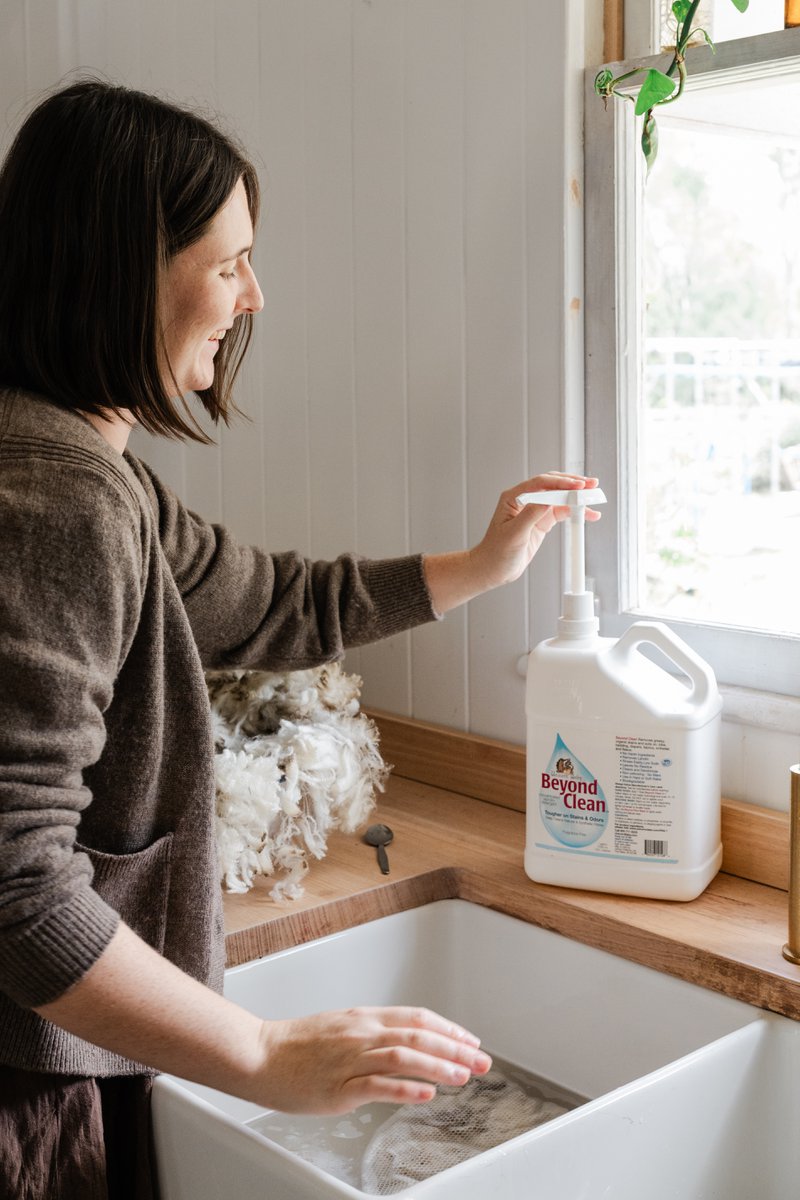
Specialty wool washes are worth using. They're formulated to break down lanolin effectively without damaging delicate animal fibres, and a little goes a long way. General household detergents can be too harsh, on both the fibre and the environment, and a lot is typically required, making it less economical both for water and product use. Samantha uses the Unicorn range as part of her regular fibre preparation routine.
If you'd like to try Beyond Clean before committing to a bottle, Thread Collective stocks trial packets.
Environmental Considerations When Scouring Wool
The Unicorn range is earth-friendly and biodegradable, but lanolin-rich wastewater still needs to be disposed of thoughtfully. Lanolin resolidifies as it cools and behaves a lot like bacon grease. It shouldn't go down household pipes or into septic systems.
If you're using a biodegradable option like Unicorn Power Scour, the safest bet is to dispose of your scour water on a garden path or lawn. It should be fine around trees and flowering plants, but keep it away from vegetable gardens.
Frequently Asked Questions About Scouring Wool
Can I scour wool in a washing machine?
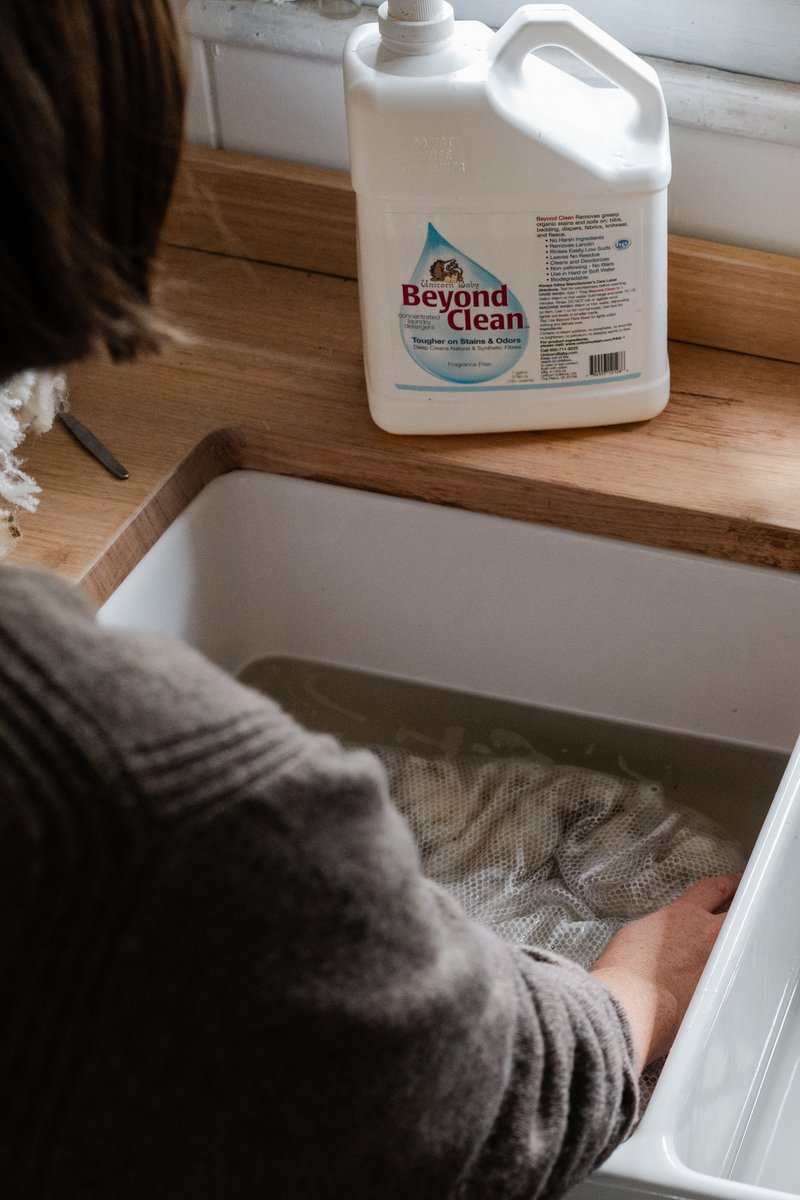
Most handspinners avoid washing machines because agitation can quickly felt the wool. Hand washing is generally much safer for raw fleece. If you have large quantities to process, a top loader washing machine may be used as it can be used as a basin and a spin dryer. After filling, leave the lid open to prevent the machine from starting an agitating cycle. Drain and then set to spin only.
How many times should I wash raw fleece?
It depends on how greasy or dirty the fleece is. Some wool needs only one wash, while particularly greasy fleeces may need two or three rounds.
Does all lanolin need to be removed?
Not necessarily. Some spinners prefer leaving a small amount of lanolin in the wool because it can make spinning smoother.
Can I use dish soap to scour wool?
While some people do use dish soap, wool-specific products are usually gentler and more effective for protecting delicate fibres.
Why did my wool felt when I washed it?
Agitation, temperature shocks, and rough handling during draining are the usual culprits. Keep the wool still, keep temperatures consistent, and support it carefully when moving it in and out of the water.
Worth the Time
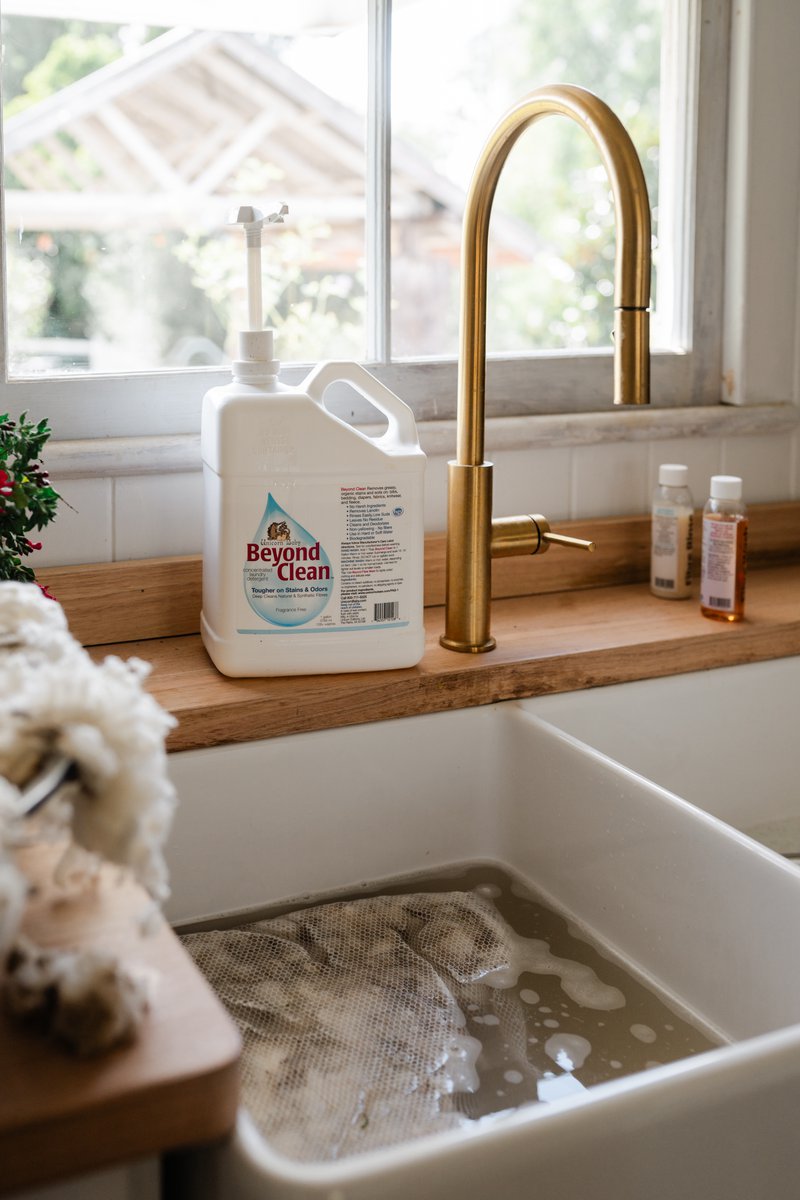
There's a lot of satisfaction in watching a dirty fleece come out clean, soft, and ready to spin. The tutorial from Samantha and Olivia shows that it doesn't have to be complicated. With the right products, consistent temperatures, and gentle handling, it's very manageable even for beginners.
Processing your own fleece also gives you a better feel for fibre quality, lets you preserve special fleeces, and connects you more fully to the process from sheep to skein.
Share this article on your favorite platform:
Table of Contents
- What Is Wool Scouring?
- Why Proper Scouring Matters
- The Fleece Used in This Tutorial
- Supplies You’ll Need to Scour Wool
- Helpful Equipment for Scouring Wool
- Understanding Lanolin in Raw Wool
- A Step-by-Step Guide on How to Scour Raw Wool Fleece
- Common Mistakes When Scouring Wool
- How to Tell If Wool Is Properly Scoured
- Choosing the Right Wool Wash Products
- Environmental Considerations When Scouring Wool
- Frequently Asked Questions About Scouring Wool
