



















Substituting Yarn in a Pattern: What to Look For Before You Start
One of the first questions every maker asks is whether they can swap the yarn a pattern calls for. The good news is that substituting yarn in a pattern is entirely possible, and it's a skill every beginner in knitting, crochet and weaving eventually picks up. Your chosen yarn might be unavailable, it might sit outside your budget, or you might simply fall in love with a different colour or fibre. Whatever the reason, understanding how to substitute yarn well will help you choose a replacement with confidence and finish a project you're proud of.
It's tempting to think that matching yarn weight is all you need to do. There's more to it than that, though. Fibre type, construction, drape, stretch, gauge, yardage and even colour all affect your finished project, so knowing what to check before you buy can save you time and spare you some frustration.
You don't need to find a yarn that's identical to the original. Instead, the goal is to pick a yarn that gives you a fabric similar to what the designer planned, or to choose something different if you're after a new look or alternative drape.
Why Substitute Yarn At All?
Patterns are often written around a specific yarn, but that doesn't mean you have to use it.
Makers commonly substitute yarn for these reasons:
- The original yarn is no longer available, or isn't available locally
- They already have potentially suitable yarn in their stash
- Natural fibres appeal more than synthetics, or the other way around
- A different colour palette catches their eye
- Budget plays a part, and a more affordable yarn does the job just as well
- Climate or comfort calls for a swap
- Texture is something they want to experiment with
Many designers actually encourage substitution, because makers have different preferences and different access to brands depending on where they live. Whatever your reason, the goal when substituting yarn in a pattern is to keep the fabric, fit or feel the designer intended, or to deliberately change it.
Important Considerations When Substituting Yarn in a Pattern
Start with the pattern requirements.
Before you go looking for alternatives, read through the entire pattern first. Pay attention to the yarn weight, fibre content, total yardage or metreage, recommended gauge, number of skeins or cakes, and suggested needle, hook or reed size.
These details tell you far more than the brand name ever will. For example, if a shawl pattern calls for a lightweight wool blend with plenty of drape, using a stiff cotton instead will give you a very different result. Neither choice is wrong if you intend for the shawl to have more structure, but it helps to know how it will change the finished piece so the final result is intentional.
Yarn weight is your starting point when substituting yarn
The easiest comparison to make is yarn weight. The Craft Yarn Council's Standard Yarn Weight System groups yarn into categories from finest to thickest: lace, super fine (fingering or sock), fine (sport), light (DK), medium (worsted, afghan and aran), bulky, super bulky, and jumbo. For a more detailed explanation of standard yarn weights, refer to our full guide.
Choosing the same weight category usually keeps you on the right track, but weight alone is never the whole story. Even two yarns labelled as fingering weight can behave quite differently once you factor in fibre and construction.
Fibre content changes everything.
Fibre determines how a finished project feels, stretches, wears and drapes. Here are some common examples:
- Wool is elastic, warm and forgiving. It blocks beautifully and often makes lace patterns shine.
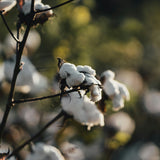
- Cotton has very little elasticity. It gives crisp stitch definition but tends to feel heavier than wool.
- Linen softens with wear while keeping its beautiful drape. It has little stretch and can feel firm while you're working with it.
- Silk adds shine, softness and luxurious drape.
- Alpaca is warm and soft with lovely drape, although it lacks memory and can therefore stretch over time.
- Mohair adds a soft halo and warmth. It also softens stitch definition, so intricate textures appear gentler.
Blended yarns combine several of these characteristics at once. If you'd like to learn more about different yarn types, our free guides cover this in more depth.
Yarn construction matters too.
Not every yarn is spun the same way. Consider whether the yarn is woollen or worsted spun, plied or single ply, chainette, brushed, bouclé, ribbon or tape. Construction influences stitch definition, durability, elasticity and even gauge. For textured knitting or crochet, a smooth-plied yarn often shows off a stitch pattern more clearly than a fluffy, brushed one will.
Always compare yardage
Many beginners compare only the ball's weight in grams, which can give you the wrong idea entirely. For example, 100g of one yarn may contain 400 metres, while another 100g may contain only 200 metres. Because patterns are written according to the total length of yarn required, always compare metres or yards rather than grams alone.
Gauge is the most important test.
If you only remember one thing about substituting yarn in a pattern, remember this: make a gauge swatch. Gauge determines whether your finished garment ends up the size it's meant to be, and even two yarns labelled identically can knit up to different tensions in your hands.
Swatching also lets you assess fabric drape, stitch definition, thickness, comfort and overall appearance. Taking a little extra time before you start can save a lot of disappointment later.
Consider the finished fabric.
Ask yourself what the project actually needs. A baby blanket benefits from softness and easy washing, a woven table runner needs stability, a lightweight summer top should stay breathable, and a winter jumper should provide warmth. The yarn you pick should suit the project's purpose just as much as it suits the pattern.
Colour behaves differently in different yarns.
Colour is something people often forget to factor in. Highly variegated yarn can hide complex stitch patterns, while solid colours tend to highlight texture. Gradients create smooth transitions that work beautifully in shawls and garments, and self-striping yarn behaves differently again.
When substituting yarn, consider whether the original sample relies on colour changes to achieve its visual impact, or whether the colour you'd like to use may hide design features rather than enhance them.
Pattern Spotlights: Substituting Yarn in a Pattern
Gardens of Giverny Shawl by Alina Appasova
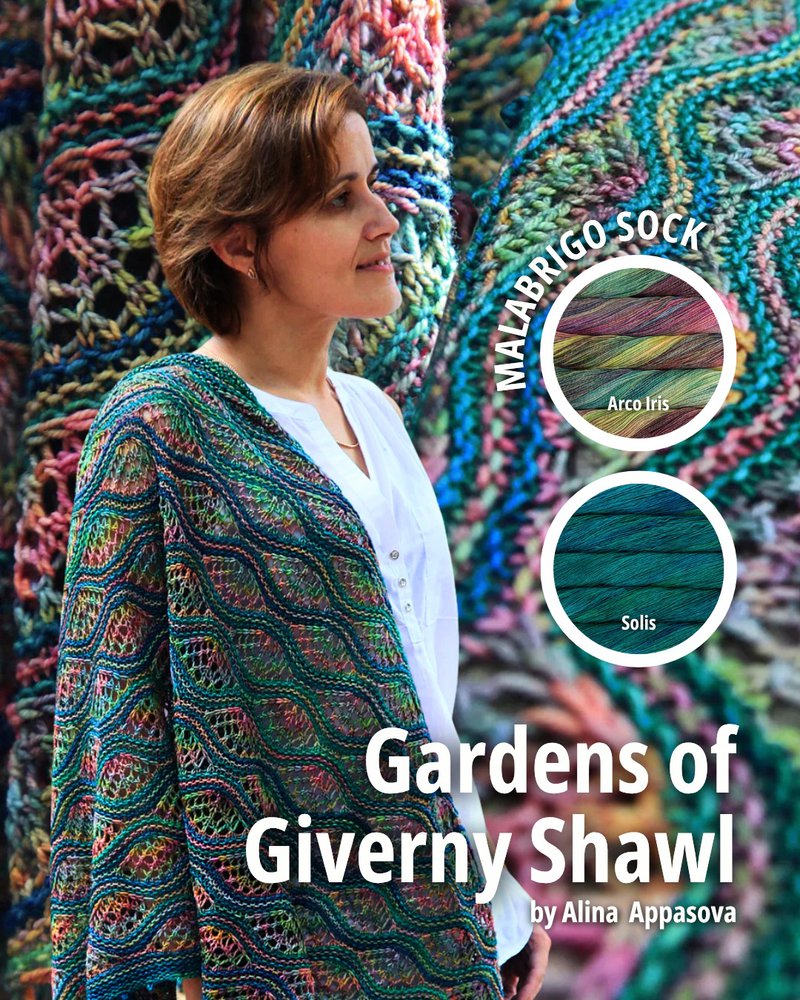
The Gardens of Giverny Shawl by Alina Appasova is a graceful lace shawl featuring flowing motifs that resemble rippling water and garden pathways. The sample combines Malabrigo Sock in Arco Iris and Solis, a fingering-weight, 100% superwash merino yarn, creating a rich blend of hand-dyed colour and solid contrast that beautifully defines the lace pattern.
Possible yarn substitutions:
- Malabrigo Sock in alternate colourways such as Pearl and Parade
- Scheepjes Organic Cotton Whirlette 100g, if you prefer to work with solids and a cotton base. Scheepjes offer a beautiful palette that would show off the lacework well, though being 100% cotton it has less give than the original merino and will produce a crisper, less drapey fabric. As with all yarn substitutions, it's worth swatching before you commit.
- Knitting for Olive No Waste Wool, for those who prefer a more natural palette
Abigail Fairy Dress by Christel Riley Watts
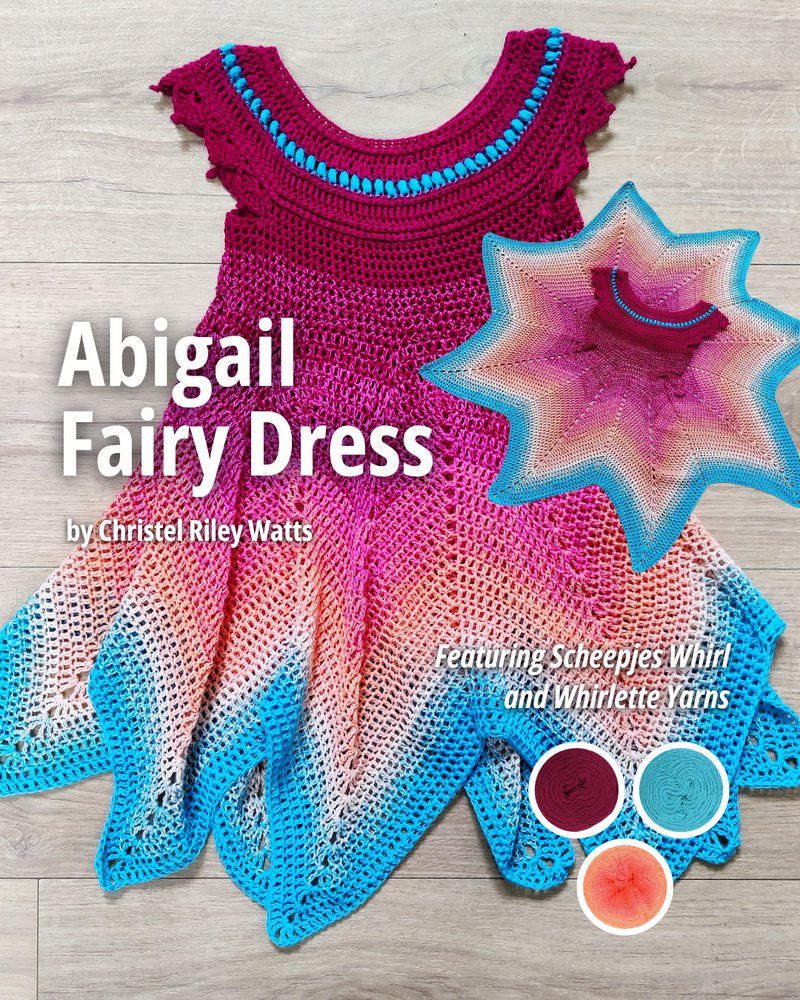
The Abigail Fairy Dress by Christel Riley Watts is worked seamlessly from the top down with no sewing required, which makes it a flexible design suitable for many sizes. The sample uses Scheepjes Whirl together with Scheepjes Whirlette, so the gradient colours flow naturally through the dress while the coordinating solid shades frame the design.
Possible yarn substitutions:
- Knitting for Olive Pure Silk, a fingering-weight, 100% bourette silk, for a very luxurious take, perhaps for a birthday dress
- Scheepjes Catona, a fingering-weight, 100% mercerised cotton, for a little extra shine. It's also EN71-3 certified, making it safe for even the most delicate skin.
Carnë Shawl by K.A.M.E. Crochet
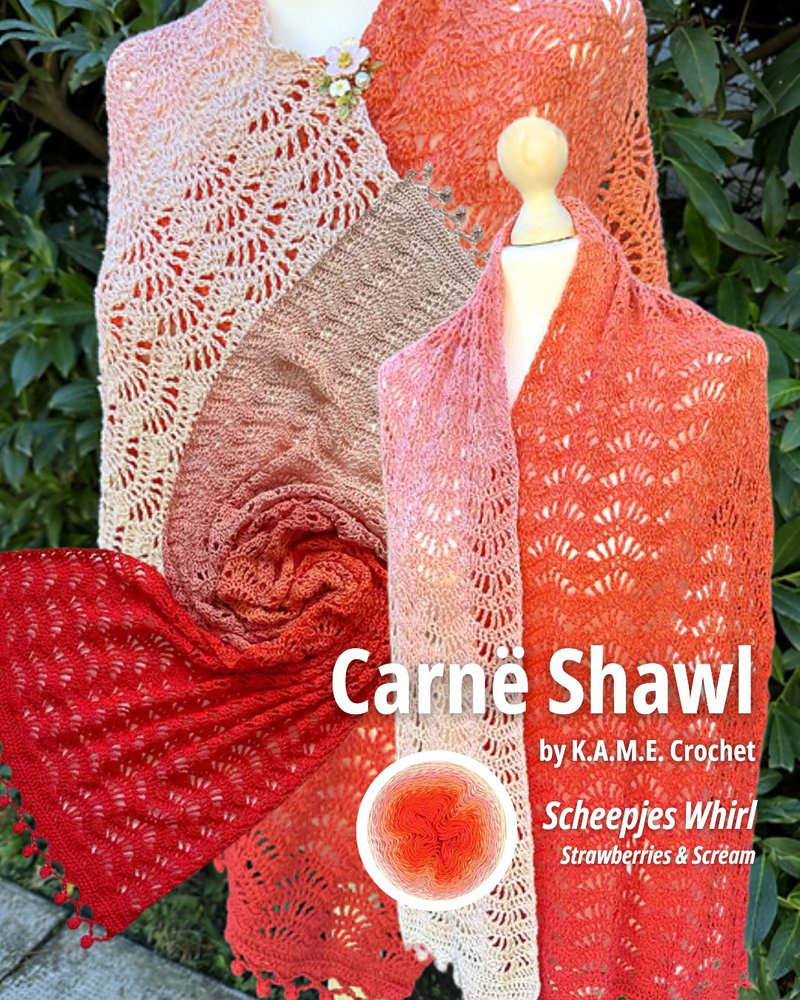
The Carnë Shawl by K.A.M.E. Crochet features elegant lace motifs that gradually open across the fabric, creating a lightweight accessory suitable for every season. The sample is crocheted using Scheepjes Whirl in Strawberries & Scream, which gives the shawl its smooth colour transition from cream to vibrant coral.
Possible yarn substitutions:
- Knitting for Olive Pure Silk, a fingering-weight, 100% bourette silk. The silk would enhance the drape further and add an extra layer of elegance to an already elegant pattern.
- Malabrigo Sock, where the unique colouring of each skein ensures your piece would be one of a kind, while the wool content makes this an excellent substitute for those in cooler climates.
Lauro Sweater by Minimi Knit Design
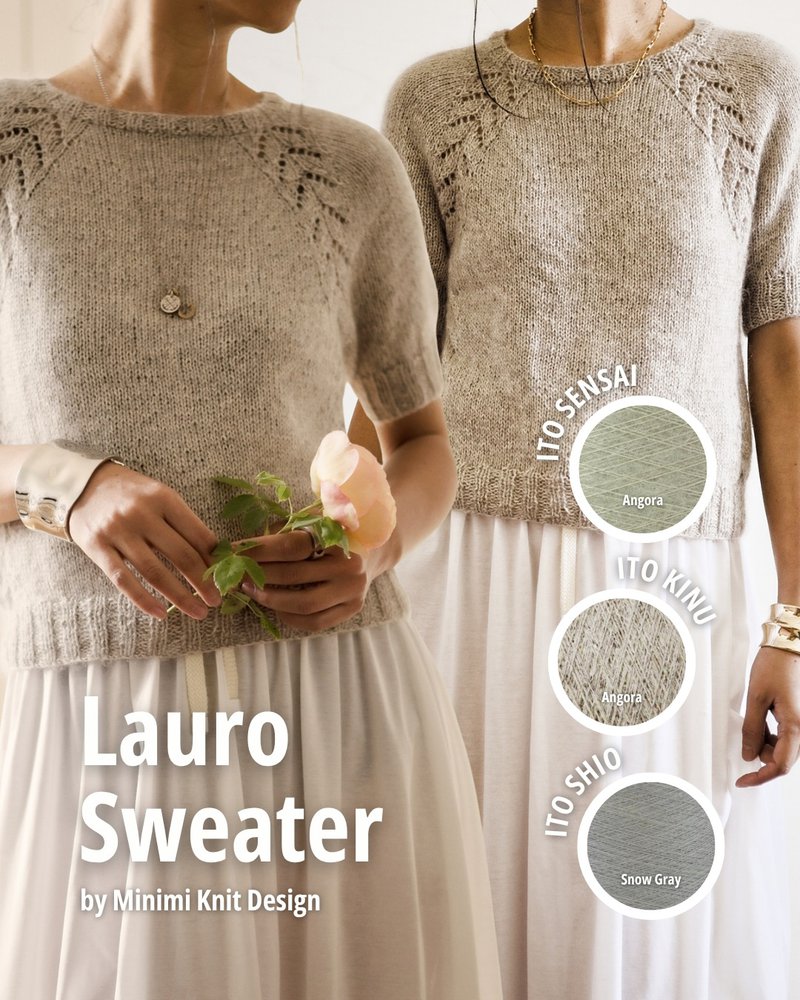
The Lauro Sweater by Minimi Knit Design combines timeless stocking stitch with delicate lace detail around the raglan shaping. The sample is knitted using a combination of ITO Sensai (Colourway: Angora), ITO Kinu (Colourway: Angora), and ITO Shio (Colourway: Snow Gray). Sensai is a lace-weight mohair and silk blend (60% mohair, 40% silk), and Kinu is a 100% silk noil yarn, sometimes called organic or bourette silk. Working these together creates an airy fabric with gentle warmth, subtle texture and an elegant halo from the mohair content.
Possible yarn substitutions:
1. Knitting for Olive Merino held together with Knitting for Olive Soft Silk Mohair a fingering-weight merino paired with a lace-weight mohair-silk blend, giving a similarly airy, haloed fabric
2. Ashford DK Double Knit Yarn a blend of Corriedale and Perendale wool, for a more budget-friendly option. This one is DK weight so is worked as a single strand. It will knit up as a warmer, more substantial sweater rather than an airy one.
Picnic Cardigan by Veronika Lindberg
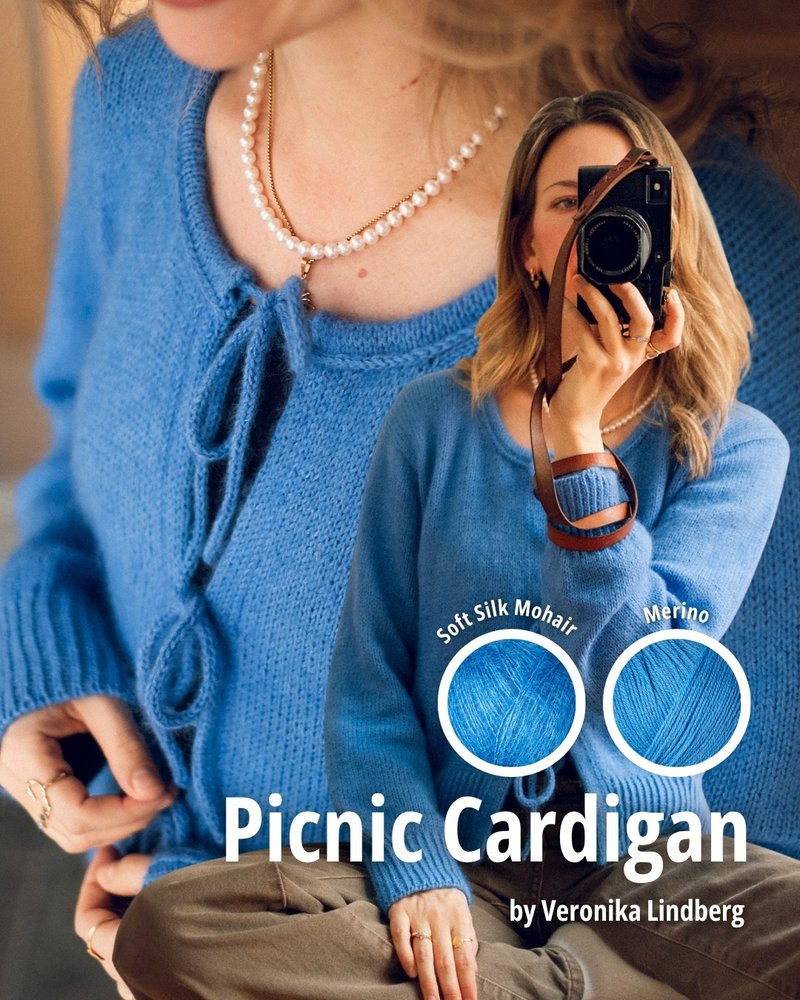
The Picnic Cardigan by Veronika Lindberg is a light and versatile layering piece with an open round neckline and delicate tie bands that add a playful, feminine touch. The sample is knitted using Knitting For Olive Merino and Soft Silk Mohair, both in the Poppy Blue colourway, creating a soft, lightweight fabric with a beautiful halo and subtle texture. When choosing a substitute, consider the combined gauge, fibre content, drape and softness of the two yarns held together.
Possible yarn substitutions:
1. Knitting for Olive Pure Silk held with a strand of Knitting for Olive Compatible Cashmere. Pure Silk is a fingering-weight, 100% bourette silk with a soft, slightly textured finish, and Compatible Cashmere is a lace-weight, 100% cashmere yarn made to be held as a second strand. Together they give a similar combined gauge and halo to the original merino and mohair pairing, with the cashmere adding warmth and drape rather than the fuzzy texture mohair provides.
2. ITO So Kosho DK weight. This is a woollen-spun blend of 90% mulesing-free merino and 10% cashmere with plenty of volume and crisp stitch definition. Worked as a single strand rather than two held together, it will knit up thicker and more structured than the original combination, so it suits this cardigan if you're after a cosier, more substantial layer.
When Should You Avoid Substituting Yarn in a Pattern?
Although substitution is usually possible, some projects are more sensitive to it than others. You may want to stick closely to the recommended yarn when making complex fitted garments, colourwork with strict gauge requirements, projects using unusual yarn construction, items requiring specific durability or stretch, and designs that rely heavily on gradient colour placement.
As your confidence grows, you'll get better at predicting how a substitution will affect the finished project.
Helpful Questions Before Buying Substitute Yarn
Before you settle on how to substitute yarn in a pattern, ask yourself:
- Does the substitute have a similar weight?
- Will it produce the correct gauge?
- Is the fibre suitable for the project?
- Does it drape similarly to the original?
- Is the yardage comparable?
- Will the colours suit the stitch pattern?
- Is it appropriate for how the finished item will be used?
If you can say yes to most of these, your yarn choice is probably a good fit.
Keep Notes As You Learn
Every time you substitute yarn in a pattern, you learn something worth writing down: the original yarn, the substitute yarn, the gauge achieved, hook or needle size, and your thoughts after finishing. Over time, you'll build your own set of notes and references, often more useful than searching for advice online, because they're based on your own hands and your own tension.
Confidence Comes with Practice
Learning how to substitute yarn in a pattern is one of the most useful skills you can build as a beginner in knitting, crochet or weaving. Rather than feeling restricted by the exact materials listed in a pattern, you gain the freedom to choose fibres, colours and brands that suit your own style, budget and creative vision.
The more you practise, the easier it gets to look at a pattern, compare a few yarns and pick a substitute with confidence. Thread Collective stocks a broad selection of fibres, weights and colours if you're after a starting point for your next substitution.
Share this article on your favorite platform:
