



















Terminology Differences: UK vs US Crochet & Knitting Abbreviations
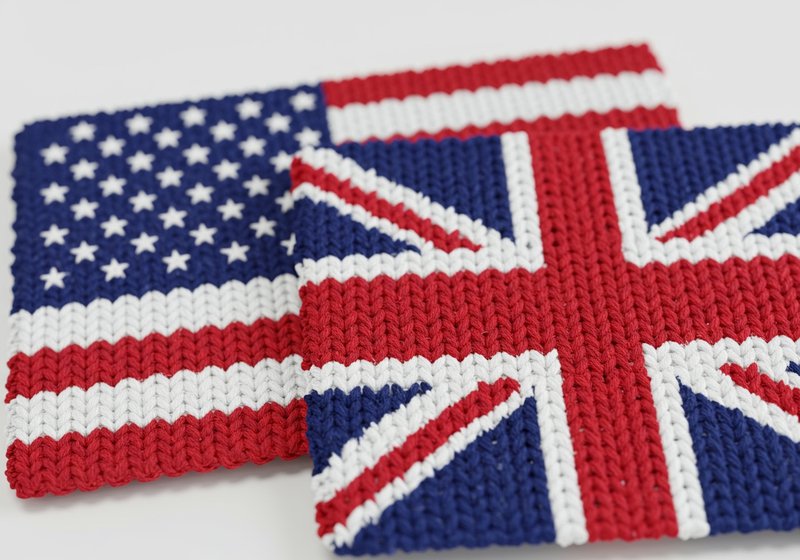
When using crochet or knitting patterns from another country, you will notice differences in stitch names and abbreviations. UK and US conventions can be confusing, so understanding these differences helps you follow any pattern accurately.
This guide outlines the key differences in crochet and knitting abbreviations between the UK and the US, and offers practical tips for working with patterns from both regions.
Crochet: Stitch Names and Abbreviations
Crochet terminology can be especially confusing for UK and US crafters, as the same stitch name may refer to different techniques depending on where the pattern was written.
| Stitch | UK Abbreviation | US Abbreviation | Notes |
|---|---|---|---|
| Chain | ch | ch | Same in both regions |
| Single Crochet | dc | sc | UK “double crochet” = US “single crochet” |
| Half Double Crochet | htr | hdc | UK “half treble” = US “half double” |
| Double Crochet | tr | dc | UK “treble” = US “double crochet” |
| Treble Crochet | dtr | tr | UK “double treble” = US “treble” |
| Slip Stitch | sl st | sl st | Same in both regions |
Tip: Always review the pattern's abbreviation list before you start. Many modern patterns include both UK and US abbreviations to help with this.
Knitting: Stitch Names and Abbreviations
Knitting abbreviations are generally more consistent between the UK and US, though some differences remain, particularly in the naming of decreases and increases.
| Action | UK Abbreviation | US Abbreviation | Notes |
|---|---|---|---|
| Knit | k | k | Same in both regions |
| Purl | p | p | Same in both regions |
| Knit Two Together | k2tog | k2tog | Same abbreviation, same technique |
| Slip, Slip, Knit | ssk | ssk | Same technique, different naming conventions exist in older UK patterns |
| Yarn Over | yrn/yfwd/yon | yo | Slight variation in wording, but function is identical |
| Increase | m1 | m1 | Same abbreviation, sometimes noted as “make 1” |
Tip: UK patterns may use older abbreviations such as "tbl" (through back loop), which are less common in US patterns. If you come across an unfamiliar abbreviation, a quick search will usually clear things up.
Why the Differences Exist
The differences in terminology come from the history of craft publishing in each country. UK patterns typically follow traditional conventions from the 19th and early 20th centuries, while US patterns developed their own shorthand over time. Even experienced crocheters and knitters can find themselves caught out if they are not aware of these regional distinctions.
Regional Yarn Differences: UK vs US Patterns
It is not just stitch names that differ between regions. Yarn terminology and measurements can vary, too, and getting these wrong can affect the size and texture of your finished project.
Yarn Weight Names
Both regions use similar categories for yarn weight, but the naming conventions differ:
| Australian Yarn Weight | UK Term | US Term | Notes |
|---|---|---|---|
| 2 ply | 1 ply | 0 or Lace | Often used for delicate lacey shawls or held together with another strand of yarn to introduce texture, colour or weight. |
| 3 ply | 3 ply | 1 or Super fine | Also known as light fingering, baby or sock |
| 4ply | 4 ply | 1 or Super Fine | Often used for socks, lightweight accessories, tops and baby garments |
| 8 ply | DK | 3 or Light | Also known as Light Worsted. Popular for sweaters and scarves |
| 10 or 12 ply | Aran, Triple Knit (rare) | 4 or medium | Also known as worsted. Standard for jumpers, blankets, and accessories |
| 12 or 16 ply | Chunky | 5 or Bulky | Heavier projects, warm outerwear |
| Super Bulky | Super Chunky | Super Bulky | For quick-knit blankets or oversized scarves |
Tip: Do not rely solely on the name. Check the wraps per inch using a yarn gauge, and verify the yardage (metres) per 100g and the recommended hook/needle size in the pattern.
For a complete UK-US yarn weight comparison, including wraps per inch and Australian (AU) weights, check out our Standard Yarn Weights Guide.
Yarn Measurements
UK patterns often list yarn by grams and metres (for example, 50g = 120m), while US patterns often list yarn by ounces and yards (for example, 1.75oz = 131yds).
Quick conversion:
- 1 ounce ≈ 28.35 grams
- 1 yard ≈ 0.914 metres
Always check the total length needed for your project. A UK “DK” skein may contain fewer metres than a US “Light Worsted” skein, so you might need an extra skein to finish your project.
Hook & Needle Sizes
UK patterns sometimes list needles in millimetres, while US patterns often use numbers or letters. For example, a 4mm needle is a US size 6. Crochet hooks follow the same principle: a 3.5mm hook in UK terms is usually labelled E-4 in US patterns.
Tip: Use a conversion chart or measuring tool to avoid tension issues, particularly when working with a gauge-specified pattern.
Quick Tips to Avoid Confusion
- Check the pattern's origin before you start. UK or US origin will immediately tell you which abbreviation system is being used.
- Keep a UK-US conversion chart handy while you work.
- Look for tutorials that specify which region's conventions they follow, so you learn the correct stitch technique from the start.
- Work a swatch before diving in. It takes a little extra time, but this is good practice for any project as it confirms that your stitch matches the pattern's intended size and tension.
Ready to Decode Any Pattern?
Once you know what to look for, working with patterns from both regions becomes much more straightforward. A quick check of the origin, a glance at the abbreviation list, and a test swatch are usually all you need to get started with confidence.
At Thread Collective, we stock yarns from Australian and international brands, so whether you are working from a pattern out of a UK magazine, a US knitting book, or a local Australian designer, you will find something in our range to suit. If you are ever unsure which yarn matches the weight called for in your pattern, our Standard Yarn Weights Guide is a good place to start, and our team is always happy to help you find the right match.
The more patterns you work through, the more these differences become second nature, and before long, you will find yourself moving between UK, US, and AU conventions with ease.
Share this article on your favorite platform:
