



















Essential Weaving Terms Every Beginner Must Know
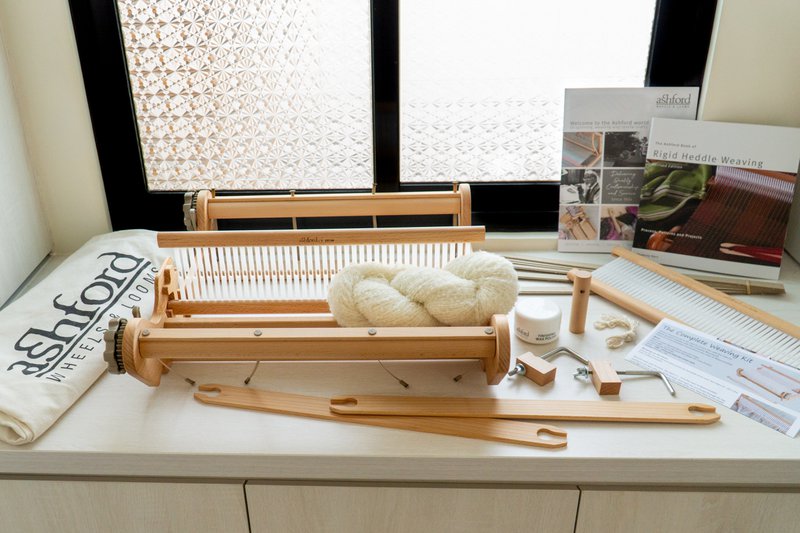
Starting to learn weaving can feel like everyone else is speaking a language you never learned. Terms like warp, shed, and take-up are used all the time, but they aren't often explained clearly for beginners.
This article aims to help with that. Instead of just giving short definitions, we'll look at what each weaving term means, how it appears in your weaving, and why it matters. You can use this as a friendly glossary to revisit whenever you feel confused, since confusion is a normal and necessary part of learning to weave.
How to Use This Guide
You don't need to read this from top to bottom in one sitting. Many beginners find it helpful to:
- Read through once for familiarity.
- Return to specific terms when setting up or weaving.
- Revisit sections as your skills develop.
The terms are grouped by concept, so related ideas build on each other and help you see more clearly how weaving works.
Basic Loom and Fabric Terms
These are the fundamental concepts that underpin nearly everything in weaving.
1. Loom
What it means:
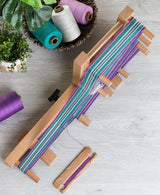
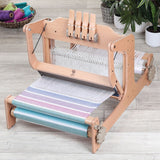
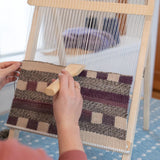
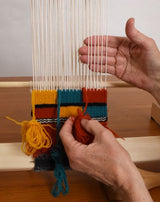
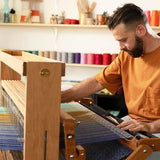
A loom is a frame or tool that holds warp threads tightly so you can weave weft threads through them to make fabric. Looms come in many sizes and types, but their main job is always to keep threads organised and steady while you weave.
Why it matters: Understanding what the loom does makes weaving less confusing. The loom doesn't weave for you—it just holds the threads in place so you can control how they cross each other.
Beginner tip: Whether you use a rigid heddle loom, table loom, or floor loom, the same basic ideas apply. The skills you learn on one loom will help you with others, too.
2. Warp
What it means:
The warp is made up of all the threads stretched lengthwise on the loom before you start weaving. These threads stay tight and do not move back and forth while you weave. They do move up and down, and depending on how they're arranged across shafts, they play a large role in determining the woven pattern.
Why it matters: The warp gives the fabric its structure and strength. The type of fibre, thickness, and tension of the warp affect how the cloth acts while you weave and after it is finished.
Beginner tip: Warp threads experience a lot of friction and tension, so beginners usually pick strong, smooth yarns that can withstand mistakes without breaking.
3. Weft
What it means:
The weft is the thread that goes across the warp, passing over and under the warp threads to make fabric. Unlike the warp, you add the weft bit by bit as you weave.
Why it matters: The weft often determines the fabric's colour and texture. It's also the part where beginners can try new things most easily.
Beginner tip: Since the weft is easier to remove and replace, it's the best place to try new yarns or techniques.
4. Selvedge
What it means: The selvedge is the finished edge of the fabric that runs along both sides, next to the warp threads.
Why it matters: Strong, even selvedges help the fabric stay flat and stop it from becoming too narrow as you weave.
Beginner tip: You get neat selvedges by keeping tension even and handling the fabric gently, not by pulling the weft tight.
Parts of the Loom You’ll Encounter Often.
These parts help organise the warp threads and make sheds.
1. Heddle
What it means: A heddle is typically a wire, cord, or steel strip with a central eye through which a warp thread passes. On a simple loom, this is replaced by a "rigid heddle". When you lift or lower heddles, they raise or lower individual warp threads to create a space (the shed) for the weft thread to pass through. Heddles are mounted on shafts/harnesses to create complex patterns.
Why it matters: Heddles decide which warp threads move and which stay in place, which lets you create patterns in your weaving.
Beginner tip: On rigid heddle looms, the rigid heddle replaces individual heddles. This makes learning easier but still teaches you the main ideas.
2. Reed
What it means:
A reed is a tool that looks like a comb. It spaces the warp threads evenly and is used to push the weft into place. Reeds are measured by how many spaces, or dents, they have per inch or centimetre.
Why it matters: The reed helps control fabric density and keeps the spacing even across the cloth.
Beginner tip: Choosing the right reed size for your yarn makes weaving less frustrating and gives you much better results.
3. Shaft
What it means: A shaft is a frame that holds lots of heddles and moves groups of warp threads at the same time.
Why it matters: Having more shafts lets you make more complex weave patterns and designs.
Beginner tip: If you're new to weaving, you might not use many shafts right away, and that's completely fine.
Setting Up the Loom
You will use these terms before you start weaving, but they affect the whole process.
1. Warping
What it means: Warping means measuring, organising, and putting the warp threads onto the loom to get ready for weaving.
Why it matters: If you warp the loom carefully, you'll have even tension and smoother weaving later.
Beginner tip: Warping can seem harder than weaving at first, but you'll get more confident as you practise.
2. Warp Length
What it means: Warp length is how long the warp threads are from beginning to end, including extra for loom waste and samples.
Why it matters: It tells you how much fabric you can make before you run out of warp.
Beginner tip: Always plan for extra length. Beginners almost always underestimate, and it's far better to have extra for sampling than to fall short.
3. Cross
What it means: The cross is a way of arranging the warp threads to keep them in order while you're warping.
Why it matters: Keeping the cross in place stops tangles and mistakes when threading the loom.
Beginner tip: Learning to protect the cross is one of the most helpful warping habits.
4. Lease Sticks
What it means:
Lease sticks are rods that keep the cross open and steady while you thread the loom.
Why it matters: They help keep the threads in order and cut down on mistakes during setup.
Beginner tip: They might feel awkward at first, but they'll save you time and frustration later on.
Weaving the Fabric
These terms explain what happens as you weave.
1. Shed
What it means: The shed is the space between the raised and lowered warp threads, through which the weft passes.
Why it matters: A clear shed makes weaving easier and helps prevent snags or skipped threads.
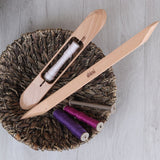
Beginner tip: If you have trouble passing the shuttle, it usually means there's a tension problem, not that you made a mistake. If it’s just one or two loose threads, consider using warp weights. If it's happening across the whole warp, increase tension or carefully re-beam.
2. Pick
What it means: A pick is when the weft goes all the way across the warp once.
Why it matters: Counting picks helps you keep your weaving even, especially when making patterns.
Beginner tip: Many beginners find it easier to get into a rhythm by thinking in terms of picks rather than rows.
3. Beating
What it means: Beating means pushing the weft into place against the fabric you've already woven.
Why it matters: It affects how dense or open your fabric will be.
Beginner tip: Firm, steady beats make better fabric than using a lot of force.
4. Tension
What it means: Tension means how tightly the warp threads are held on the loom.
Why it matters: If the tension is uneven, your fabric will be uneven too.
Beginner tip: Try to keep your tension even, but don't worry if it's not perfect.
Understanding Finished Cloth
These terms describe the changes that occur during and after weaving.
1. Take-Up
What it means: Take-up means the warp threads get shorter as they cross with the weft during weaving.
Why it matters: It reduces the length of the woven fabric compared to the original warp length.
Beginner tip: Take-up happens while the fabric is still on the loom, before you take it off.
2. Shrinkage
What it means: Shrinkage happens when you wash or finish the woven fabric, and the fibres relax.
Why it matters: This changes the final size, feel, and drape of the cloth.
Beginner tip: Making a sample is the best way to see how a yarn will behave after finishing.
A Gentle Reminder for Beginners

No weaver learns all these terms right away. You'll understand more as you practise, repeat, and stay curious. Confusion isn't failure; it means you're learning. Download your FREE Quick Reference Guide for Weaving Terms here.
When you're ready to pick yarn, tools, or equipment for your weaving, check out Thread Collective for carefully chosen weaving supplies. Plus, we have plenty of free guides for weavers of all skill levels. We can help you weave with confidence, from your first project to many more.
Share this article on your favorite platform:

1 comment
Now THIS is how you write a glossary for newcomers – essential reading for this hobby, well done!