

































Stainless Steel Weaving Reeds | Leclerc


Need reliable weaving reeds that won't rust? Leclerc's stainless steel weaving reeds are the perfect solution, ensuring long-lasting use for your creative projects.
As a creative fibre artist, you know all too well the frustration of equipment that doesn't measure up. Rusting reeds can impede your work, delaying the joy of your craft. Life before finding the right tools can feel like a constant battle against inefficiency and limited options.
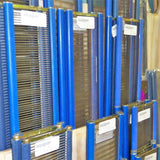
Enter the Stainless Steel Weaving Reeds by Leclerc, designed to eliminate those frustrations. With durable stainless steel construction, these reeds are built to last and stay rust-free. Available from 4 to 25 dents per inch, they cater to your specific needs, making your weaving experience smoother and more enjoyable.
Imagine the freedom of creative expression and the satisfaction of seamless weaving with tools that match your passion. With these quality reeds, your artworks reflect your best efforts, filling you with pride and joy as you share your creations with the world.
KEY FEATURES AND BENEFITS
- Rust-resistant stainless steel ensures long-lasting durability
- Available in a wide range of DPI options from 4 to 25, catering to all project needs
- Various lengths available, from 9 1/2" to 120", suitable for different loom sizes
- Streamlined and smooth weaving experience, enhancing creativity
1 x Stainless Steel Weaving Reed
- Material: Stainless steel
- DPI: 4 to 25 dents per inch
- Length: 9 1/2" to 120"
- Reed Height: 4" inside, 5 1/4" outside
Leclerc reeds may fit looms from other manufacturers, but compatibility isn't guaranteed. It's essential to verify the dimensions of your loom's beater to ensure a proper fit.
The dent size, or dents per inch (DPI), determines the spacing of warp threads. Common sizes include 6, 8, 10, 12, and 15 DPI. Choose a dent size that matches your desired ends per inch (EPI) for the fabric or that can achieve the sett you desire by altering your threading. For example, threading 2,2,3 in a 10 DPI reed gives 23 DPI, or 3,3,3 gives 30 DPI.
Yes, you can use a wider reed in a narrower loom if the beater's ends are open. The reed will overhang the sides, but it will function properly.
While stainless steel reeds resist rust, it's good practice to occasionally wipe them with a soft cloth to remove dust and debris. If discoloration or minor rust appears, spraying with WD-40 and wiping with a nylon scratch pad along the teeth can help. Ensure no rough spots remain that could damage warp threads.
Dents per inch (DPI) refers to the number of spaces (dents) in one inch of the reed. It determines the spacing of warp threads and affects the density of the woven fabric.
Store long reeds horizontally to keep them straight and prevent bending. Shorter reeds can be stored vertically. Using a reed holder with compartments can help organize and protect them.
Yes, you can adjust the number of threads per dent to accommodate different yarn sizes. For example, placing multiple finer threads in a single dent or skipping dents for thicker yarns can achieve the desired sett.
You can determine your weaving width by measuring the inside of your harness.
For minor rust, spray the reed with WD-40 and wipe along (not across) the teeth with a nylon scratch pad. Ensure all residue is removed to prevent damage to warp threads. If rust is extensive, it might be best to replace the reed.