














38 Spinning Terms Beginners Must Know
Starting your spinning journey is exciting, creative, and at times a little confusing. If you have ever joined a fibre group, watched a tutorial, or browsed a spinning forum and wondered what everyone was talking about, you are not alone.
Spinning has its own language. The good news is that you do not need to memorise everything at once. Think of this guide as your friendly reference book. You can bookmark it and come back anytime you need a refresher. Over time, these words will start to feel natural, and you will speak “spinner” fluently without even realising it.
Let us walk through the essential spinning terms every beginner should know.
1. Spinning Wheel
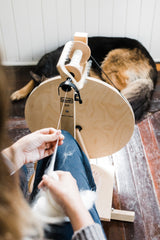
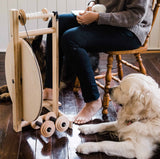
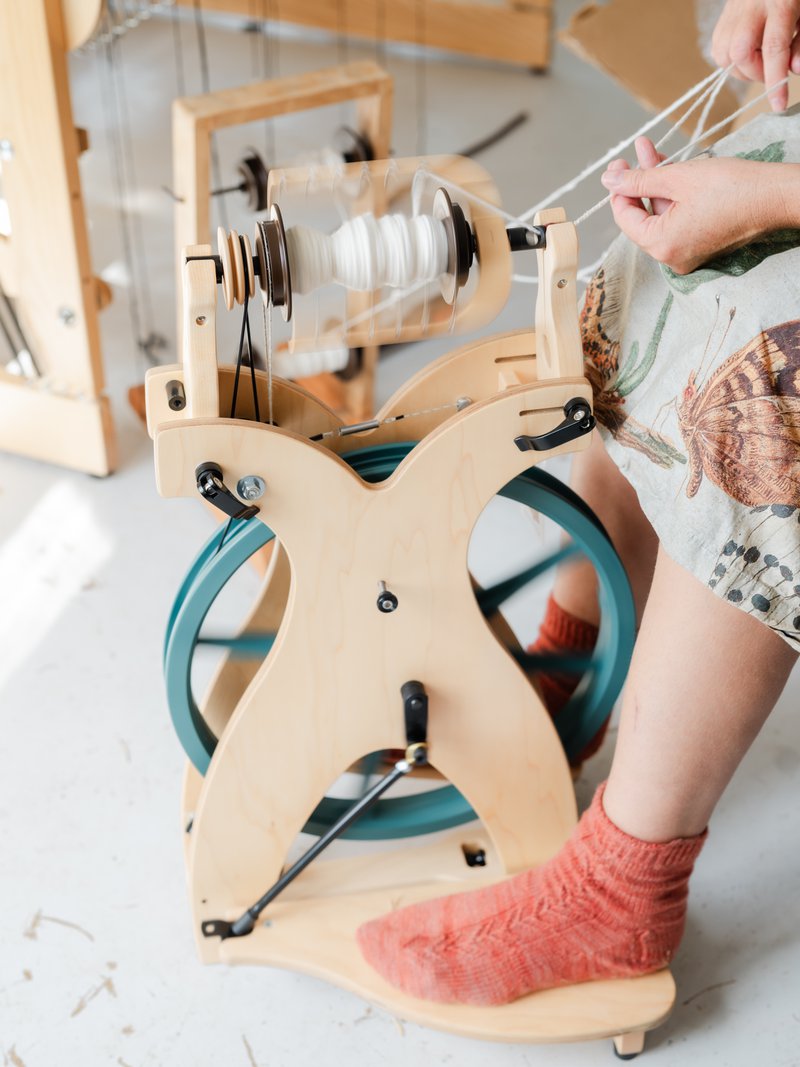
A spinning wheel is a tool used to add twist to fibre to create yarn. You treadle with your feet to turn the wheel, which drives the flyer mechanism or bobbin, depending on the wheel type. This adds twist to the fibre as your hands draft it, while tension from the wheel winds the finished yarn onto the bobbin.
There are many styles and sizes of spinning wheels, and choosing one can feel overwhelming at first. If you would like a deeper look at how to choose the right one, read this guide: “Choosing a Spinning Wheel for Your Fibre Arts Journey”.
Do not feel pressured to buy the most complex wheel when you are just starting. A simple, well-adjusted wheel can aid in the production of almost any yarn desired.
2. Drop Spindle
A drop spindle is one of the oldest and simplest spinning tools. It is a weighted stick that you spin by hand to twist fibre into yarn.
It is portable, affordable, and perfect for beginners. Many spinners actually start here before moving to a wheel.
If you want to learn more about how drop spindles work and how to choose one, visit “What are the Different Types of Drop Spindles?”
3. E-Spinner
An e-spinner, or electric spinning wheel, uses a motor instead of treadles. You control the speed electronically, which makes it compact and easy to use, especially if you have limited space or mobility concerns.
To explore this option further, read “E-Spinners: What Are They and When Would I Use Them?”
4. Single Drive and Double Drive
These terms describe how the drive band connects the wheel to the flyer and bobbin.
- Single drive uses one drive band that connects the drive wheel to either the flyer or the bobbin. A separate brake band then controls the other component.
- Double drive uses one long drive band looped in a figure-eight that connects the drive wheel to both the flyer and the bobbin simultaneously. Both components are driven at the same time, but at slightly different speeds, creating smooth, continuous yarn take-up.
Each system affects how yarn is drawn onto the bobbin and how tension behaves. If you want a full explanation, see: “The Difference Between Single-Drive and Double-Drive Spinning Wheels”
Do not worry if this sounds technical. With practice, you will feel the difference more than you understand it intellectually.
5. Scotch Tension
Scotch tension is a type of single-drive system. The drive band runs around a whorl on the flyer, turning it to add twist to the fibre. A separate brake band sits over the bobbin, controlling how quickly the yarn winds on. Because the flyer is what is driven, Scotch tension is also called "flyer-led."
It gives you precise, easy-to-adjust control over yarn take-up and is beginner-friendly. Most beginners find it straightforward to understand and adjust.
Learn more here: “What is the Difference Between Scotch Tension and Irish Tension Spinning Wheels?”
6. Irish Tension
Irish tension is another single-drive system. In this setup, the drive band runs directly to the bobbin, turning it. A brake band sits over the flyer, slowing it down so the bobbin can wind on the yarn. Because it is the bobbin that is driven, Irish tension is also called "bobbin-led."
The strong take-up of an Irish tension wheel makes it well-suited to spinning thicker, bulkier yarns. Spinning very fine yarns can be trickier on these wheels without some adjustments - this system has a reputation for stronger uptake or “pull”.
Read more about the difference here: “What is the Difference Between Scotch Tension and Irish Tension Spinning Wheels?”
7. Drafting
Drafting is the process of pulling fibres out to thin them before twist is added. It controls the thickness of your yarn. There are multiple ways to draft, but the three most common you will hear referenced are short forward, short backward and long draw.
Good drafting is far more important than speed. Slow and steady wins whenever you are learning.
8. Fibre Preparation
This refers to how fibre is organised before spinning. Common preparations include:
- Roving
- Top
- Rolags
- Batts
Different preparations influence whether you spin woollen, worsted or “semi” yarns.
9. Woollen Spinning
Woollen spinning creates airy, lofty yarn. Fibres are arranged in multiple directions, trapping air and producing soft, warm, lofty yarn.
To understand the technique in detail, read: “Woollen Spinning: A Beginner’s Guide”
10. Worsted Spinning
Worsted spinning produces smooth, dense yarn. Fibres are aligned in parallel, resulting in stronger, more defined stitches.
Learn more here: “Worsted Spinning: A Beginner's Guide”
11. Twist
Twist is what holds fibres together. Without enough twist, your yarn is under-spun. Too much twist, and your yarn becomes over-spun.
Learning to control twist is one of the first big milestones in spinning.
12. Over-Spun
Over-spun yarn has too much twist. It may kink, coil, feel hard and even snap.
Do not panic if this happens. It happens to everyone at some point in their journey.
If you need help troubleshooting, read: "How To Fix Over-Spun Yarn”
13. Under-Spun
Under-spun yarn has insufficient twist. It may drift apart or break easily.
The solution is usually simple. Add more twist by treadling more and reducing tension and/or by moving to a faster ratio to add more twists per treadle.
14. Singles
A single is one strand of spun fibre before it is plied. You can use singles on their own, but they are often combined with others for strength.
15. Plying
Plying is twisting two or more singles together in the opposite direction of the original twist. This balances the yarn and makes it stronger.
If you are new to plying, these guides will help:
16. Two-Ply, Three-Ply and Beyond
These terms describe how many singles are combined.
- Two-ply is soft and drapey.
- Three-ply is round and durable.
- Four-ply and more create structured yarns.
The more plies in a yarn, the rounder and more durable it becomes. For projects that will see a lot of wear, such as sweaters or socks, spinning a three-ply or higher is worth the extra effort, as it will hold up far better over time.
17. Andean Plying
Andean plying is a technique for creating a two-ply yarn from a single bobbin of singles. You wind the yarn around your hand in a specific pattern that creates a "bracelet" around your wrist, with both the start and end of the yarn accessible. You then ply from both ends at once.
It is handy when you have leftover singles on one bobbin, or when you want a quick two-ply sample without winding onto a second bobbin.
18. Rolags
Rolags are small, fluffy rolls of carded fibre, typically prepared on hand carders or a blending board. The fibres are arranged in multiple directions, which makes them ideal for woollen spinning.
Rolags aid in the construction of airy, lofty yarn with beautiful texture and warmth. If you would like to learn how to make your own, read: “A Guide to Creating Rolags for Spinning”
19. Skein
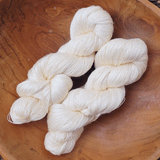
A skein refers to yarn wound off a bobbin into a loop, typically with the use of a niddy noddy. Once secured (use scraps of yarn to tie loose figure-of-8 ties in multiple spots around the skein, being sure not to compress the yarn), it is ready for washing and finishing.
20. Setting the Twist
This involves either steaming or gently washing and drying your yarn so the fibres relax and the twist balances. It helps your yarn behave better in knitting or weaving.
21. Take-Up
Take-up is how quickly and strongly the yarn is pulled onto the bobbin. It is adjusted through tension settings.
Too strong, and the yarn winds on before it has gathered enough twist. Too weak, and the yarn won't wind on at all — leaving twist to build up.
22. Leader
A scrap length of yarn that is attached to the bobbin to start spinning. You join your fibre to the leader so the wheel can begin drawing in twist right away. Its primary purpose is to carry the twist from the spinning mechanism into the new fibre.
23. Flyer
The U-shaped part of a spinning wheel that guides yarn onto the bobbin. It rotates around the bobbin and has hooks or a sliding hook along its arms to distribute yarn evenly as it winds on.
24. Bobbin
The spool that holds your spun yarn.
25. Orifice
The hole at the front of the flyer where yarn enters the flyer assembly. A larger orifice allows you to spin thicker yarns, while a finer orifice benefits finer yarns by reducing movement at the orifice. Most wheels come with an orifice hook, which is a small hook used to thread yarn through the orifice and onto the flyer.
26. Drive Band
The band that transfers motion from the wheel to the flyer and bobbin. On single-drive wheels, it loops once; on double-drive wheels, it loops in a figure-eight to drive both components.
27. Treadling
The action of pressing the pedals to turn the wheel. Smooth, rhythmic treadling leads to consistent twist. Treadling and ratio are interlinked. For example, when using a 6:1 ratio on your whorl, the flyer will rotate six times per treadle.
28. Drafting Triangle
The triangular space where twist meets unspun fibre, giving the spinner control over yarn thickness. It acts as a bridge between the hand holding the fibre supply and the hand feeding the twist. Try to get the same amount of fibres in this triangle with each draft.
29. Staple Length
The length of individual fibres. Medium - to long-staples are easier for beginners to draft.
30. Crimp
The natural waviness of wool fibres. More crimp often means more elasticity in the finished yarn.
31. Boucle
Boucle yarn features decorative loops created by a specific plying technique. It looks textured and playful.
If you are curious about spinning boucle, read: “How to Spin Your Own Bouclé Yarn From Start to Finish”
32. Fractal Spinning
Fractal spinning is a colour technique that creates repeating, harmonious colour transitions in plied yarn.
Learn how it works here: “Fractal Spinning Technique: From Roving to Yarn”
33. Art Batts
Art batts are sheets of blended fibres that may include different colours, textures, and even speciality fibres such as silk, alpaca, or sparkly elements. They are created on blending boards and drum carders and are often used for art yarns.
Spinning from art batts allows you to experiment with colour transitions and texture in exciting ways. If you would like to learn how to create your own, visit: “Creating Art Batts: A Guide to Mixing Colours and Textures”
34. Whorl
A whorl is the circular pulley on a spinning wheel or drop spindle that determines how much twist is added per treadle or spin. Different-sized whorls change your spinning ratio, which affects how fine or thick your yarn can be spun.
Smaller whorls generally create more twist per rotation, which is helpful for fine yarns. Larger whorls create less twist and are useful for thicker yarns.
35. Roving
Roving is a long, continuous rope of carded fibre that has been lightly twisted to hold it together. It is one of the most common fibre preparations beginners start with because it drafts smoothly and consistently.
Roving can be spun woollen or semi-worsted, depending on how you draft it, making it a versatile and forgiving choice when you are learning.
36. Lazy Kate
A lazy kate is a simple stand that holds your bobbins while you ply. It keeps them upright and allows them to unwind at a controlled tension as you work, preventing tangles and backspin. Some wheels come with a built-in lazy kate; others are sold separately or can be made at home.
37. Niddy Noddy
A niddy noddy is a hand tool used to wind yarn off your bobbin into a skein after spinning. It consists of a central handle with two arms at opposing angles. Winding around these arms creates a loop of consistent length, making it easy to measure your yardage and prepare your yarn for washing and finishing.
38. Swift
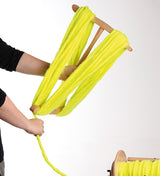
A swift is an expandable reel used to hold a skein of yarn while it is wound off into a ball or onto a bobbin. It spins freely as yarn is drawn from it, keeping the skein taut and tangle-free. Most swifts are umbrella-style and adjustable to fit different skein sizes.
A Gentle Reminder for Beginners
If this list feels long, take a breath.
You do not need to master everything at once. Most beginners focus first on drafting, twist control, tension adjustment, and basic plying. The rest will come naturally with practice.
Spinning is not about perfection. It is about rhythm, feel, and curiosity. Some of your early yarns may be uneven. That is not a failure. It is a record of your learning.
Keep this guide bookmarked and return to it whenever you need clarity, or download this FREE Printable Spinning Glossary. Over time, these terms will feel familiar and comforting.
You are building a new skill, one twist at a time. And that is something to be proud of.
Share this article on your favorite platform:
