




























Ergonomic Weaving: Setting Up Your Loom and Workspace for Comfort
Weaving is one of the most satisfying fibre crafts out there. The rhythm of the shuttle, the steady beat of the reed, watching cloth slowly form. It's deeply absorbing. But that absorption is also what gets people into trouble. You look up and three hours have passed, your shoulders are somewhere around your ears, and your lower back is complaining.
The good news is that most weaving-related discomfort is preventable. Ergonomics is the science of fitting your workspace to your body, and when your loom, bench, tools, and lighting are set up well, you can weave longer and more comfortably.
This guide walks you through setting up your loom and workspace for comfort. Whether using an Ashford Rigid Heddle Loom at the kitchen table or weaving on a Louet David III Floor Loom, the principles remain the same. Comfort fosters craftsmanship.
Why Ergonomics Matters in Weaving
Weaving is a repetitive activity. Repetition itself isn't the problem; poor positioning during repetition is. Common complaints from weavers include:
- Lower back pain
- Neck and shoulder tension
- Wrist soreness
- Hip stiffness
- Tired or numb feet from treadling
- Eye fatigue that shows up as neck tension (because you're leaning forward to see)
A good setup lets you maintain a neutral posture, reduce muscle strain, and actually enjoy the process. Comfort isn't a luxury here; it's what lets you keep weaving for years.
Choosing the Right Location for Your Loom

Before you adjust anything else, think about where your loom lives. Loom placement affects everything downstream.
Give yourself enough space. You should be able to sit without your knees pressing against walls, move your arms freely when throwing the shuttle, and stand up to stretch without negotiating around furniture. Cramped placement forces awkward posture from the start.
Think about your flooring. If you're on a floor loom with treadles, hard tile or concrete will wear on your feet and joints over long sessions. A firm anti-fatigue mat or a thin rug with a non-slip backing helps. Avoid very thick, soft mats as they make it harder to press treadles with control.
Consider ventilation. Weaving generates body heat, especially in long sessions. A comfortable temperature and some airflow keep your muscles relaxed and reduce fatigue.
Setting the Correct Bench or Chair Height
This is one of the most important things to get right, and it's different depending on what kind of loom you're using.
For Floor Loom Weavers
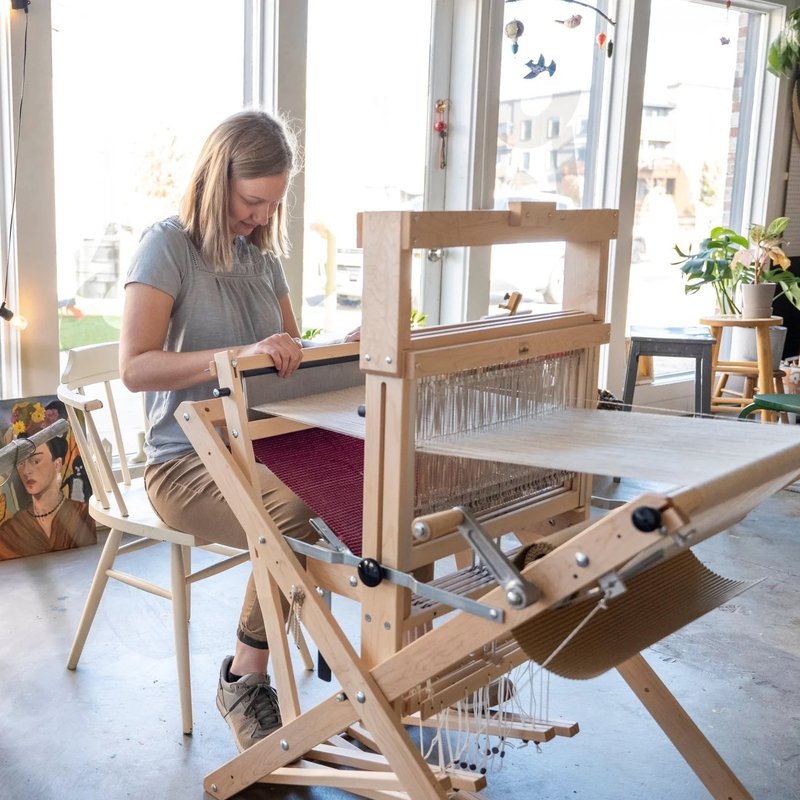
For a floor loom, the goal is a position where your elbows are just above or clear of the breast beam when your arms are at roughly 90 degrees, your thighs slope clearly downward toward your knees (not horizontal), and your feet can reach the treadles without straining. This downward thigh position matters more than most people realise - if your knees are too high (at or above hip level), treadling requires much more effort because you're lifting your thighs to reach each treadle, which quickly becomes exhausting.
If your bench is too low, you’ll round your back and compensate by lifting your shoulders when throwing the shuttle. If it's too high, your feet won't make solid contact with the treadles, and you'll compensate in uncomfortable ways.
An adjustable bench, such as the Schacht Floor Loom Bench, is the easiest solution. If yours is fixed height, a firm cushion can raise it, or you can attach small wooden blocks to the treadles to bring them closer if your legs are shorter.
One useful tip: try sitting very close to the loom, even pressing your body lightly against the breast beam. This naturally supports your back and makes it much easier to maintain good posture.
For Table Loom or Rigid Heddle Loom Weavers
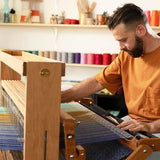
For table-based weaving, aim for a chair height where your hips are at roughly 90 degrees or slightly more open - this is the position that best supports your lumbar spine. Your forearms should be roughly parallel to the floor, and your upper arms should move minimally to reach the beater.
If your feet don't reach the floor, use a footrest. Resting your feet on chair rungs for long periods puts pressure on the backs of your knees and restricts circulation.
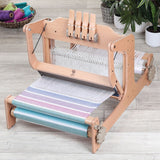
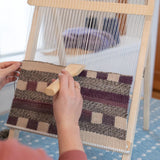
For rigid heddle looms, especially, using a dedicated stand makes a significant difference. Without one, larger looms (24" and above) often require a longer reach, which stresses your shoulders and encourages you to hunch. A stand brings the loom to the right height and angle.
Maintaining Healthy Posture at the Loom
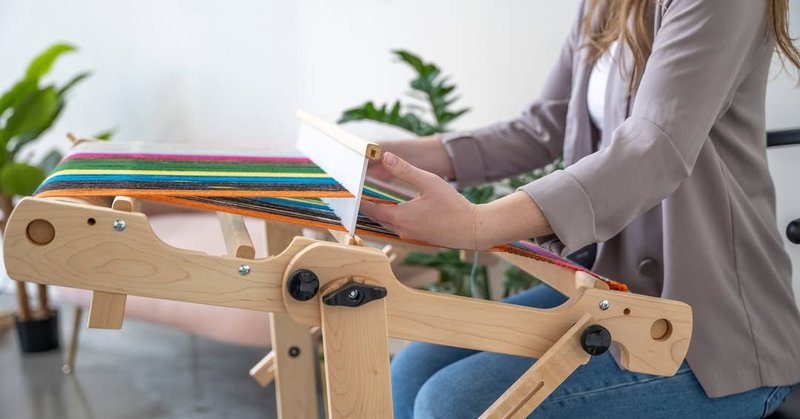
Good posture doesn't mean sitting rigidly. It means setting yourself up so your body isn't fighting gravity all session.
1. Sit Back on Your Sit Bones
Avoid perching on the edge of the bench. Sit firmly on your sit bones with your spine lengthened. Imagine a string lifting the crown of your head upward.
2. Relax Your Shoulders
Shoulders tend to creep upward during concentration. Periodically check in:
- Are your shoulders near your ears?
- Are you gripping the shuttle tightly?
Consciously soften your shoulders and loosen your hands.
3. Keep Wrists Neutral
Avoid bending them sharply up or down. Repeated wrist flexion over time is one of the main contributors to tendon strain in craft workers.
4. Avoid Leaning Forward Constantly
If you find yourself always reaching toward the work, your bench is probably too far back. Move it closer so you're not extending your arms fully to beat. Lean in briefly when you need to inspect your selvedges, then return to neutral.
Positioning Your Loom Correctly
The distance between you and the loom matters as much as your bench height.
For Floor Looms
You should be close enough that your elbows stay slightly bent when throwing the shuttle, and you're not reaching forward to beat. But not so close that your knees are cramped or your stomach presses against the breast beam. If you find yourself stretching forward repeatedly, move your bench slightly closer rather than compensating with your posture.
For Table Looms
Ensure the loom is stable and not shifting during beating - if it moves, you'll end up bracing against it with more force than necessary. The loom should also be positioned so you're not reaching across the table to work. A floor stand, like those available for the Schacht Flip Rigid Heddle Loom, brings the loom to the right height and angle and makes a noticeable difference compared to placing it flat on a dining table.
Foot and Treadling Comfort
Treadling can cause strain if not addressed properly.
1. Balanced Foot Pressure
Press treadles with control, not force. Stomping uses energy quickly and contributes to hip and knee fatigue. Light, deliberate pressure is enough.
2. Alternate Starting Foot
Alternate starting feet when your pattern allows it. This distributes the load more evenly and reduces one-sided strain over long sessions.
3. Keep Heels Supported
Keep your non-treadling foot supported. The foot that isn't actively pressing a treadle should rest on the floor or on a bar, not hanging in mid-air. Some looms have heel rests built in; if yours doesn't, a small box or block beside the treadles does the job.
Shuttle Throwing and Beating Technique
Comfort is influenced not only by setup but by technique.
Shuttle Throwing
Use a relaxed grip on the shuttle. Gripping tightly increases fatigue in your hands and forearms. Let your forearm guide the motion rather than relying on wrist flicking.
Beating
Beat with your arms, not just your wrists. Use your upper body to pull the beater, keeping your elbows slightly bent rather than locking your joints. If beating feels like hard work, check your warp tension first - a warp that's too tight requires significantly more force to beat.
Lighting and Eye Comfort
Poor lighting is often the hidden cause of neck and shoulder tension, because the response to not seeing clearly is to lean forward.
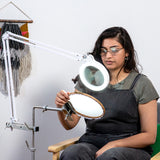
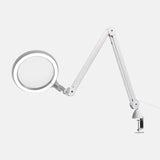
Aim for bright but diffused overhead light, plus a task lamp you can direct at your weaving area. Natural light from the side works well if you have it. Avoid strong light directly behind you, which casts shadows onto your work.
If you're weaving dark yarn on dark yarn, increase the light intensity significantly. And if you wear glasses, depending on your prescription, wear them at the loom.
Tool Placement and Workflow
Keep the things you reach for most: scissors, temple, measuring tape, extra shuttles, within easy reach at your side. Reaching behind you or twisting repeatedly to grab tools adds up over a session.
A small side table or tool organiser next to your loom is worth having. It's a simple change that makes a real difference.
If you use a warping board or mill regularly, store it where you can access it without awkward lifting.
Taking Breaks and Micro Stretches

Even a perfectly arranged workspace doesn't replace movement. Your body needs it.
Take a short break every 30 to 60 minutes. This is commonly recommended for repetitive tasks across most ergonomics guidance. Stand up, roll your shoulders, shake out your hands, and move around briefly. Short, frequent breaks are more effective than longer, infrequent ones.
A timer helps if you tend to lose track of time while weaving. It's not unusual to realise two hours have passed when you thought it was thirty minutes.
Simple stretches at the loom:
- Neck side bends (ear toward shoulder, each side)
- Shoulder rolls
- Wrist circles
- Standing and pressing your hands on the back beam of the loom with your hips at 90 degrees - this opens up the chest and upper back, which tend to tighten during weaving
Rotate tasks when you're doing long sessions. Alternate between weaving, winding bobbins, and planning your next project. Changing your task also changes your body position, which is a break in itself.
Managing Long Weaving Sessions
When weaving yardage or preparing for a market, sessions can last longer than usual. Plan ahead.
Stay hydrated. Dehydration contributes to muscle fatigue. Keep water nearby.
Use a timer. It's very easy to keep going past the point where your body is trying to tell you something.
Listen to the early warning signs. Tingling fingers, persistent neck tightness, aching wrists, and headaches during weaving are signals worth taking seriously. Adjust your setup when you notice them rather than pushing through. If discomfort is consistent or if you develop numbness, swelling, or loss of grip, consult a healthcare professional such as your GP and/or a physiotherapist. The earlier you address it, the faster the recovery.
Notes for Specific Loom Types
Rigid Heddle Looms
Rigid heddle looms involve a lot of arm movement for heddle operation, so shoulder relaxation is especially important. If yours is on a stand, make sure the stand height puts your elbows at that 90-degree position when working.
Table Looms
Table looms require frequent hand movement to change shafts. Make sure your chair height lets you lift your arms comfortably without shrugging your shoulders, and check that the loom isn't sliding during beating - instability means you'll compensate with extra effort.
Floor Looms
Floor looms involve your whole body. Treadling footwear and flooring matter more than people expect. Thin-soled shoes give you a better feel for the treadles than thick-soled ones. If you're on hard flooring, your feet will thank you for a firm mat underneath.
Creating a Workspace You Love
Physical comfort matters, but so does how the space feels overall. A workspace that's inviting - with organised yarn storage, good lighting, and a seat you enjoy sitting in - makes it easier to settle in and focus.
Weaving is a long-term craft. Getting your ergonomics right now protects your body for all of that time. The small adjustments in this guide aren't complicated, and most of them cost nothing. But they add up to sessions that feel good from start to finish.
When your body is comfortable, your weaving genuinely improves too. You're more accurate, more consistent, and more present in the making.
A Final Thought for New Weavers
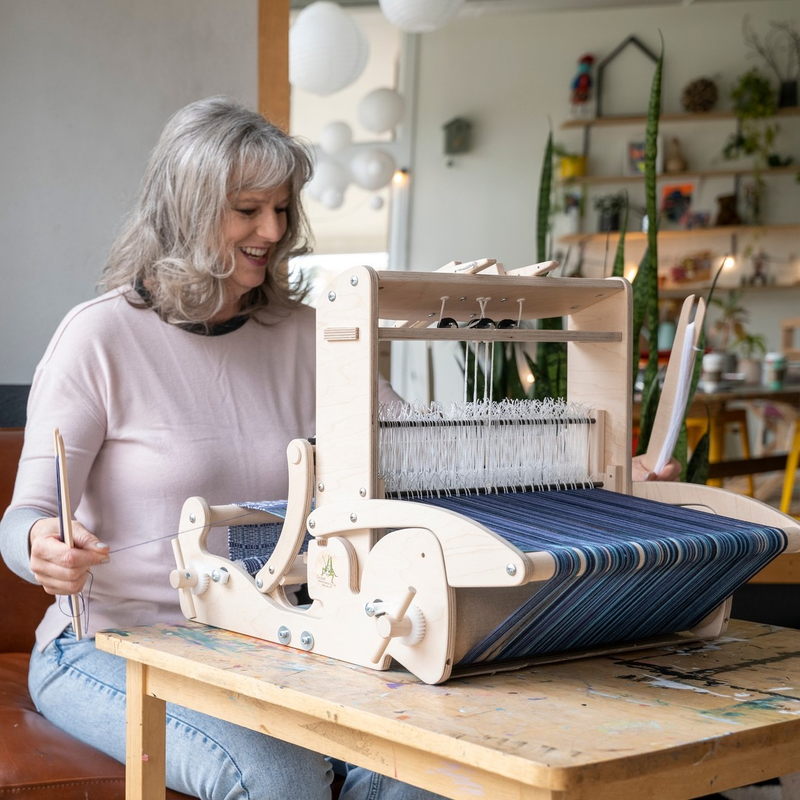
When you're just starting out, it's easy to focus entirely on technique, yarn choice, and project planning. Ergonomics feels like something to worry about later.
But weaving is a long-term craft. Many weavers do it for decades. Getting into good habits now - even small ones like adjusting your bench height or taking a short break every hour - protects your body for all of that time.
Your loom should be a place of creativity and calm, not discomfort. With a thoughtful setup, you can weave longer, with greater precision, and most importantly, with genuine enjoyment. When your body is supported, your weaving flourishes.
Share this article on your favorite platform:
